PET/CT and AI can sharpen veterinary care, but their value depends on whether teams use the results to guide decisions for each patient.
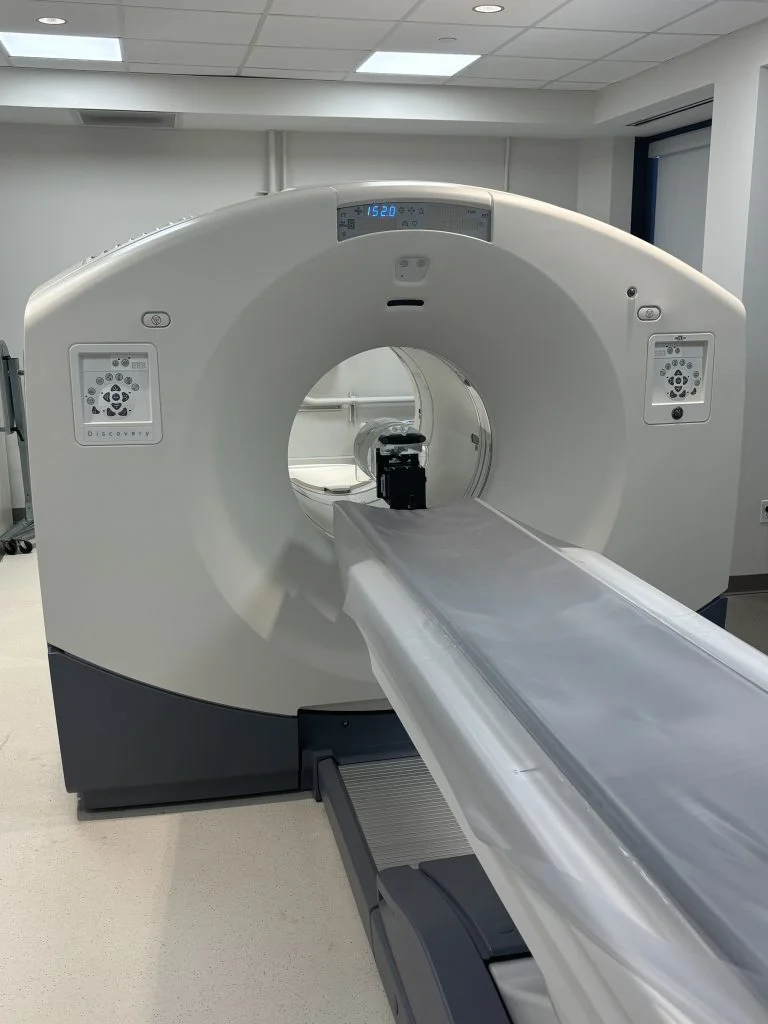
Veterinary technology earns its place when it helps a team make a better decision for a particular patient. A scan that finds a hidden tumor can support early treatment; the same kind of imaging can also help clinicians avoid a risky procedure. That balance—knowing when information calls for action and when it supports restraint—is where advanced diagnostics matter most.
About one in four dogs will develop cancer in their lifetime, according to the American Veterinary Medical Association.¹ Earlier detection can widen treatment options, but a more detailed picture of disease doesn’t automatically make care better. Test results need to be weighed against the animal’s condition, likely quality of life, and the family’s circumstances. The practical question is not simply what a device can reveal. It’s whether the result will change the care plan in a useful way.
One scan, two different decisions
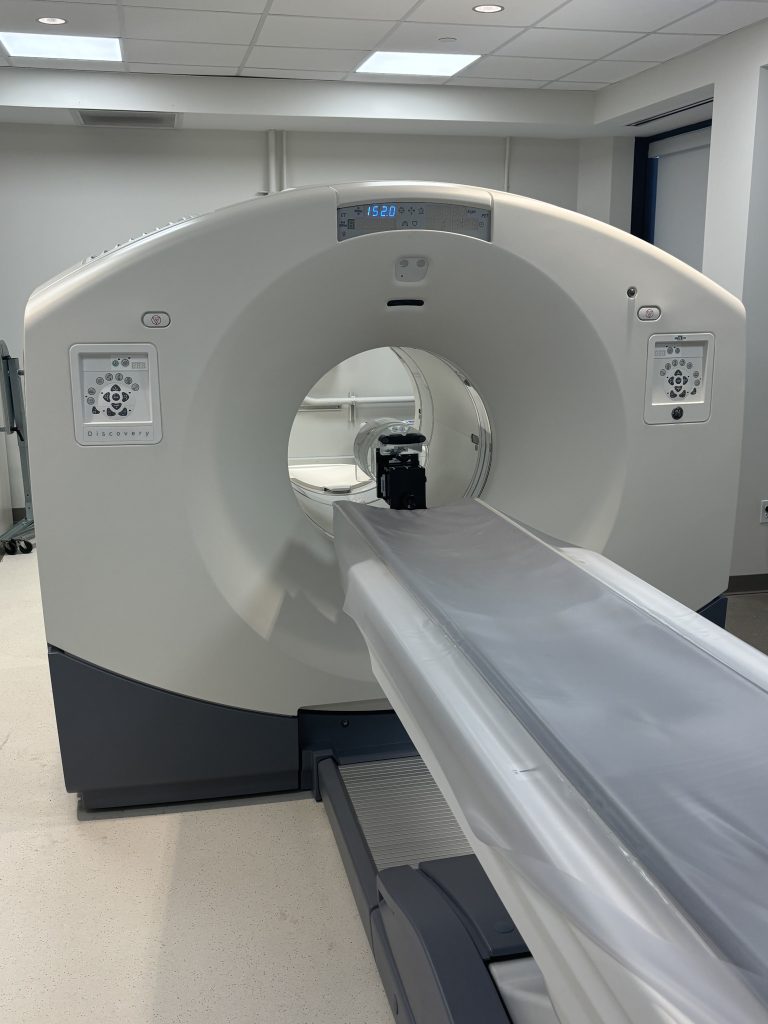
PET/CT illustrates both the promise and the limits of increasingly precise veterinary diagnostics. The CT component shows anatomy, including the location and size of an abnormality. PET uses a radiopharmaceutical tracer to reveal metabolic activity. Together, the images offer clinicians information about both what a finding looks like and how biologically active it may be.
The technology is most familiar in oncology, where it can help identify lesions and stage disease. It may also help investigate problems such as fever with no clear cause or unexplained lameness. But an imaging result rarely settles a diagnosis by itself. Further testing may be needed, and incidental findings can trigger additional procedures without improving the patient’s outcome.
Two cases at Red Bank Veterinary Hospital in Tinton Falls, New Jersey, show how PET/CT can inform opposite choices. In one, a dog received the scan for an unrelated reason. It revealed a small subcutaneous lesion that hadn’t previously been recognized. An excisional biopsy identified a mast cell tumor. Finding the tumor before it had progressed or caused visible signs gave the veterinary team an opportunity to treat it promptly, with a likely curative result.
In the second case, the clinical question concerned an atypical cystic lesion in the liver. PET/CT showed no uptake of the radiopharmaceutical tracer, suggesting a low likelihood of aggressive disease. That information supported avoiding a high-risk liver biopsy and surgery. Follow-up ultrasound examinations have found the lesion to be stable.
In one patient, imaging strengthened the case for intervention. In the other, it helped the team and client consider why intervention might not be justified. That’s a useful measure of a diagnostic tool’s value: it can help make the decision more informed in either direction.
Use the result to shape the conversation
Clinical findings are only part of the decision. Two pets with the same diagnosis may need different plans because of age, temperament, expected quality of life, or the burden of treatment. Families also bring different priorities and financial circumstances. Advanced testing can clarify the choices, but a scan can’t decide which trade-offs are right for a particular household.
Before recommending an advanced test, a veterinary team can ask whether the answer is likely to change treatment, clarify prognosis or quality of life, and justify the cost and practical burdens involved. Those burdens may include anesthesia, travel, and follow-up testing. The team also needs to explain what the result can show—and what it can’t—with enough clarity for clients to take part in the decision.
Here’s the thing: more information can make a conversation more useful only when its limits are part of that conversation. A test result isn’t a treatment plan. It should give the veterinary professional and the client a stronger basis for choosing among available options, with medical, emotional, ethical, and financial realities in view. The most technologically advanced option may not be the most appropriate one for a given patient.
AI can save time, but it can’t own the decision
Artificial intelligence is entering veterinary practice through diagnostic support, medical documentation, client communication, and administrative work. When a tool helps organize records or handle routine tasks, it may free clinicians to spend more time with patients and their owners. That benefit depends on people checking the output and using it in context.
AI can produce information that is incomplete, biased, or wrong. It therefore calls for clear practice rules on privacy, appropriate use, human oversight, and verification. Veterinary professionals remain accountable for interpreting an output alongside the full clinical picture and explaining its relevance to clients.
Training is one gap between adoption and responsible use. A 2026 study of 673 veterinary workers found that 72.3 percent expected AI to change the profession, while 90.5 percent said they had received little or no formal training in it.² Those figures point to a practical need: teams need time and guidance to understand where these tools help, where they can fail, and how to review their results.
Technology works through people
Equipment changes and software gets updated. The knowledge a veterinary team builds can shape practice for years. Mentorship, internships, residency programs, and continuing education help professionals assess new tools and use them with care. They also help teams communicate with referring veterinarians, who need confidence that their patients will receive coordinated care.
For clients, trust depends on understanding why a test or tool is being used and how its result will affect the choices ahead. Even sophisticated equipment has limited value if the people involved can’t explain its purpose or interpret its findings together. The strongest care combines technical capability with sound judgment, collaboration, and clear communication.
The next advance in veterinary medicine may come from a scanner, a laboratory test, or an AI system. The more lasting challenge will be deciding when its information changes the plan, when it supports watchful restraint, and how to help each family make that choice. Better tools can widen the options; people still have to determine which option fits the patient.
Peter S. Chapman, BVetMed, DECVIM-CA, DACVIM, MRCVS, earned his veterinary degree from the Royal Veterinary College (RVC), University of London, in 1998. He completed a small animal rotating internship and a Small Animal Internal Medicine residency at the RVC. From 2003 to 2009, Chapman served as staff and faculty at the University of Pennsylvania. He joined BluePearl in Levittown, Pa., in 2009, practicing as a Small Animal Internal Medicine specialist through 2025, serving as residency program director, and becoming medical director. He is now medical director at Red Bank Veterinary Hospital in Tinton Falls, N.J., an emergency and specialty hospital within National Veterinary Associates (NVA).
References
- American Veterinary Medical Association. Cancer in pets. Available from: https://www.avma.org/resources/pet-owners/petcare/cancer-pets
- Ofer O, Pearl DL, Singh A, Appleby R. Veterinary workers report low knowledge of artificial intelligence but positive attitudes toward its adoption in diagnostic imaging and the workplace as a whole. Journal of the American Veterinary Medical Association. 2026 Jun 1;264(6):1-7. Available from: https://avmajournals.avma.org/view/journals/javma/264/6/javma.25.08.0545.xml
Discussion
Sign in to join the discussion.