After a serious riding accident, beekeeper and veterinarian Tracy Farone adapted her apiary work with help, mobility equipment and a focus on essentials.
When the beekeeper needs care
Keeping bees through a disability can demand a different kind of beekeeping: less lifting, more planning, and a willingness to let other people take the lead. Dr. Tracy Farone learned that firsthand after a horse riding accident left her hospitalized and unable to walk normally. Her experience offers a practical message for beekeepers facing injury or illness: the work may need to change, but with medical guidance and help, you may still have a role in caring for your bees.
Click Here if you listened. We’d love to know what you think. There is even a spot for feedback! Read along below!
By: Dr. Tracy Farone
A season interrupted
Farone had planned a summer of outdoor activities with her family. On Memorial Day, a horse she had been training bolted during a ride. She tried to dismount, struck a tree and was airlifted to a Pittsburgh hospital. Her injuries included two pelvic fractures, a partially collapsed lung, an eight-centimeter pelvic hematoma with ongoing bleeding, and severe whiplash. She spent two days in intensive care and remained in recovery months later, still learning to walk again.
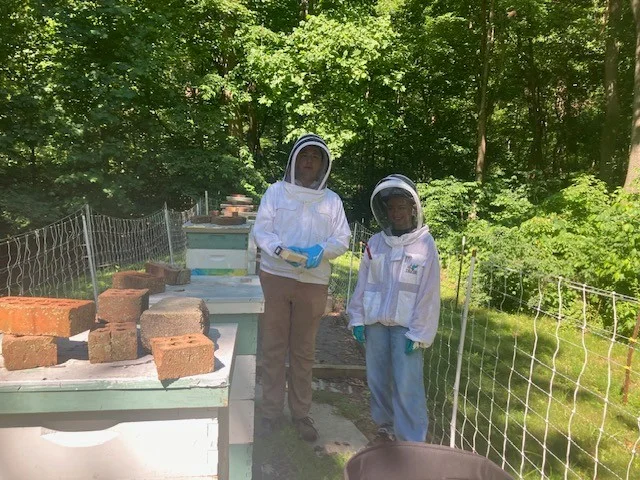
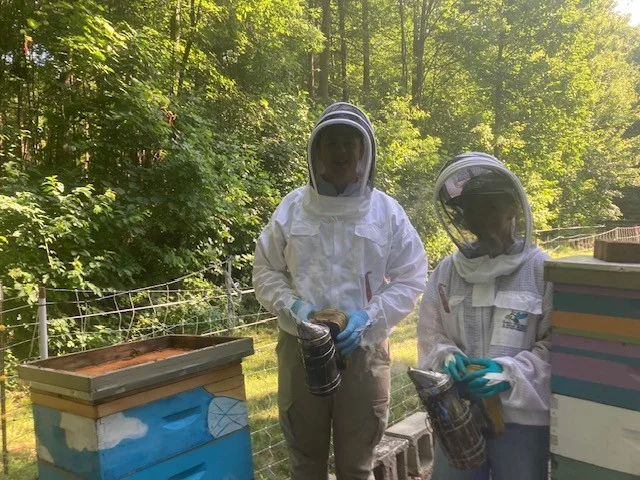
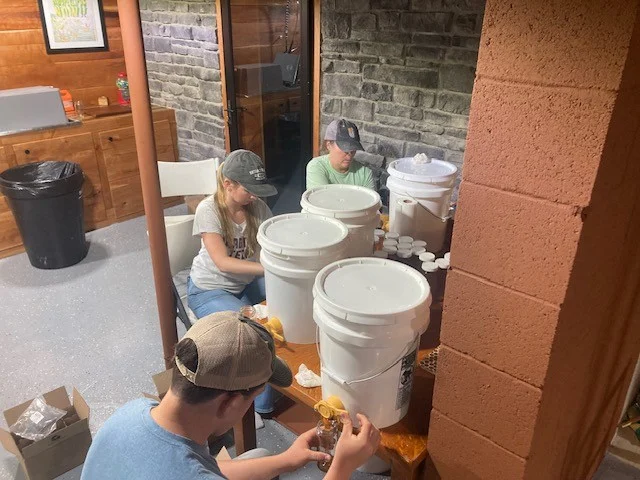
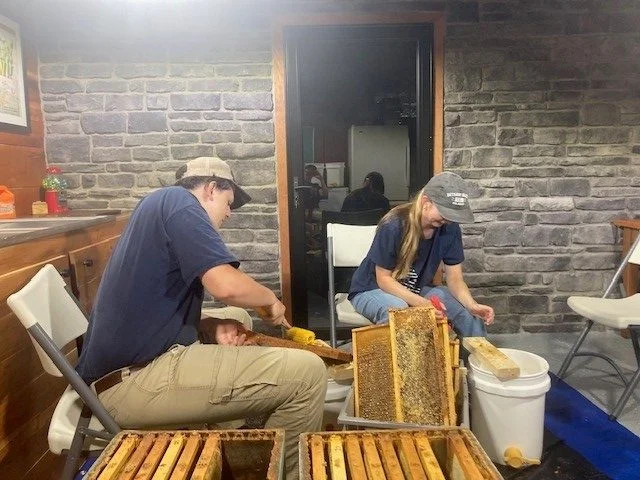
The timing complicated matters. Farone and her students had just begun a 10-week summer honey bee research program, including an international collaboration. The students had arranged their summer around the work, and the colonies still needed attention. After a week in the hospital, Farone and her team worked out a way to continue the project and manage the bees. The adjustments they made point to several ways a beekeeper can stay involved while recovering.
Let the care team help plan the work
Farone’s first recommendation is to follow medical advice and explain specific goals to doctors and therapists. General recovery instructions may not address the demands of a bee yard, but a physical or occupational therapist can help assess what’s practical and how to approach it safely.
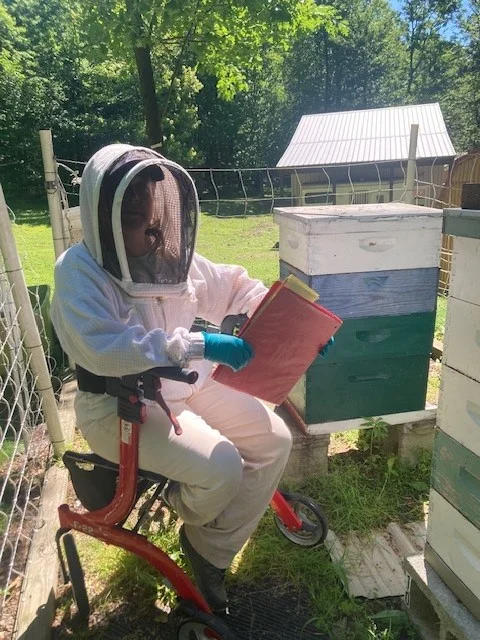
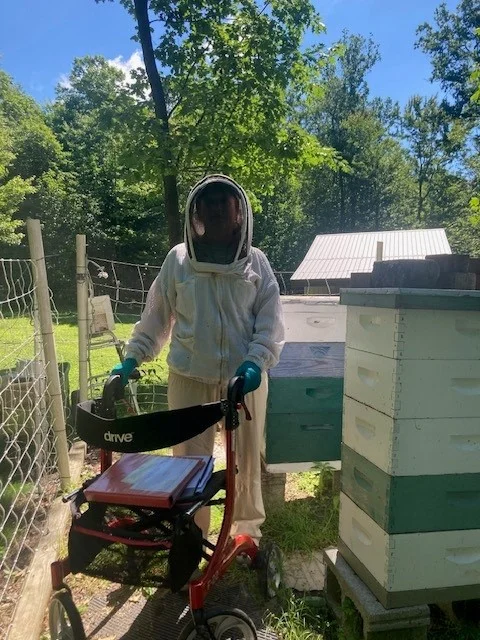
During four weeks of in-home physical therapy, Farone’s therapist visited her apiary. They practiced getting from the house to a side-by-side vehicle, driving to the yard, then using a rollator to reach a place where she could sit. That hands-on assessment turned a vague hope of returning to the bees into a plan with manageable steps. Farone also stresses keeping up with therapy, along with getting sleep and nutrition where possible.
Bring other people into the apiary
Beekeeping involves lifting, standing and repeated movement, so a beekeeper who can’t manage those tasks may need someone else to do them. Asking can feel difficult, especially for people used to handling the work themselves. Farone suggests looking to family, neighbors, friends, local beekeeping clubs, students, schools or community groups. Experienced beekeepers can still share knowledge and mentor from a chair while helpers take on the physical tasks.
Her own students were new to beekeeping and had expected to learn gradually. Instead, the circumstances required them to take on more responsibility quickly. Farone says they gained confidence and skill after a few days in the yard. The experience suggests that a temporary need for help can also create an opening for new beekeepers to learn through meaningful work.
Adapt access and equipment
Mobility aids can make a yard more reachable. Farone learned about wheelchairs, walkers, canes and rollators during rehabilitation; her physical therapist and neighbors helped her find equipment at no cost. A rollator was particularly useful on the terrain, offering support while walking and a seat for inspections or pauses. For those able to drive, a side-by-side or four-wheeler may help with access to a rural apiary.
Technology can preserve a beekeeper’s involvement when getting to the yard isn’t yet possible. For the first two weeks of the research work, Farone used FaceTime to guide students during their time with the colonies. It wasn’t the same as being there, but it let her share observations and direct the work remotely. She also recommends asking a doctor promptly about the paperwork for a temporary accessible parking placard, since processing may take time and requirements vary by state.
Set a smaller goal for the season
Recovery is a poor time to expect a normal workload. Farone advises against expanding an apiary and suggests considering a temporary reduction in colony numbers. Her focus shifted to keeping colonies alive, with adequate nutrition and Varroa management, and leaving extra honey for the bees.
That narrower goal can still involve meaningful work. Farone’s colonies did less well than she had hoped: she made fewer splits and saw more swarms. With help from her students, though, the team continued its collaborative research in the bee yard. The season wasn’t business as usual, but it wasn’t a complete pause either.
Recovery also has a mental side
Injury can bring frustration, worry, loneliness and flashbacks, Farone writes, and those effects deserve attention alongside physical rehabilitation. For her, getting outside among the bees and students brought a measure of relief. Time in the yard didn’t erase the injury; it gave her mind a break from it.
She encourages recovering beekeepers to stay connected with friends and family, draw on faith if it helps, read, or find a club project that can be done while seated. Small activities can provide a sense of connection when physical capacity is limited.
Let the timeline remain open
Serious injuries can take time to settle into a clear prognosis. Farone says it may be months before someone knows what they can do, and both the beekeeper and the apiary may need to adjust to new goals. Her own hope was to be physically functional in the bee yard by the following spring, though she couldn’t yet know how recovery would progress.
Her account also raises a question for the beekeeping community: could a beekeeper’s health affect colony health? Farone knows of no study or survey examining that relationship. For now, her experience offers a practical takeaway: plan around the capacity you have today, ask others to share the work, and give recovery the time it needs. The bees may require a different kind of care for a while, and the beekeeper can still help shape it.
Reference
- https://www.who.int/news-room/fact-sheets/detail/disability-and-health Accessed 8/21/2026.
Discussion
Sign in to join the discussion.