James E. Tew looks back on a century of beekeeping, tracing changes in tools and advice while honoring the people and familiar debates that shaped the craft.
Are We Any Better Off?
Click Here if you listened. We’d love to know what you think. There is even a spot for feedback! Read along below!
By James E. Tew
A century is a useful lens, not a scientific boundary
James E. Tew has spent more than fifty years keeping bees. He and his brothers once managed about 200 colonies; now, in his later years, he tends roughly ten, and admits they receive only marginal management. The arc has brought him close to where he began: two hives, then a rapid expansion, and now a small apiary again.
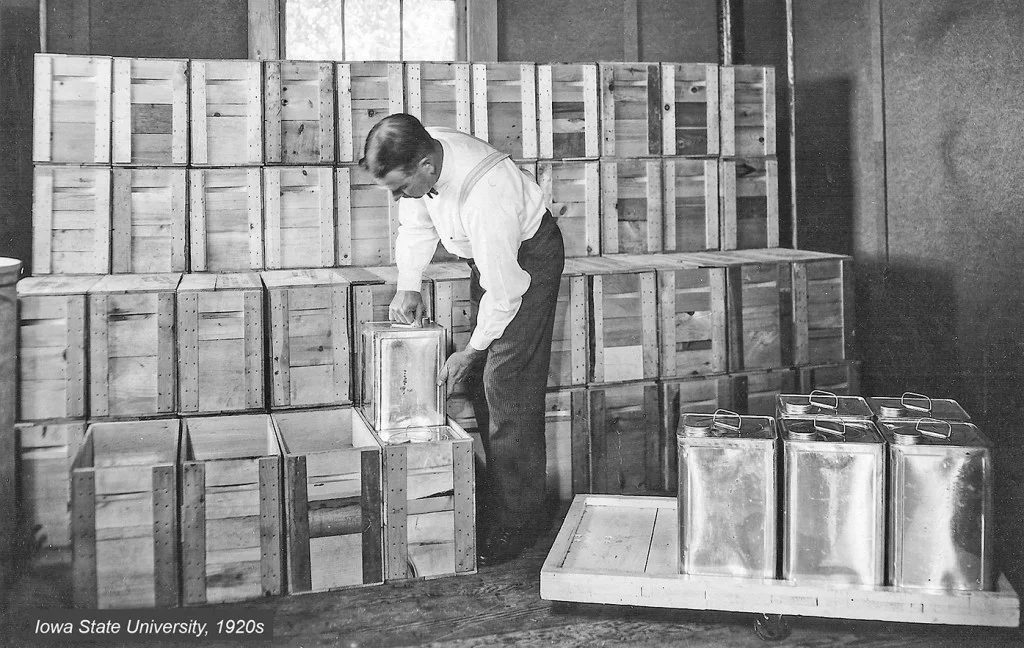
That personal history gives Tew a reason to look back, though “100 years” is mostly a convenient round figure. He has watched 60-pound metal honey tins give way to five-gallon plastic buckets, seen plastic spread through beekeeping gear, and watched podcasts and online material become ordinary sources of advice. Some practices have changed dramatically. Others have barely moved.
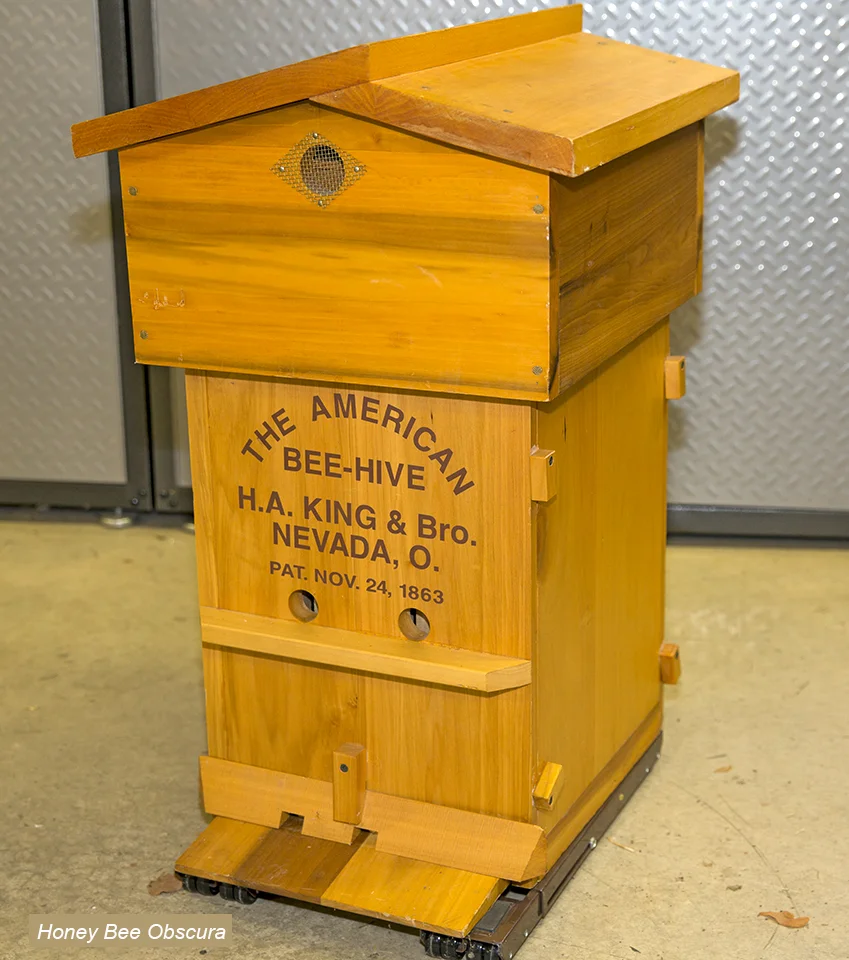
Here’s the thing: much of what we recognize as modern beekeeping was already established long before 1926. Removable-frame hives date to 1851, comb foundation to 1843, and the centrifugal honey extractor to 1865. Those tools had been in use for decades by the time this comparison begins. Yet box hives and bee gums persisted, and Tew remembers seeing them himself.
Even the arguments sound familiar. Beekeepers accepted the value of removable frames but disagreed over hive dimensions and brood-nest size. The Langstroth hive didn’t become the default at once; it took years of experience for it to rise above competing designs. A century later, beekeepers still debate equipment and methods. We may be modern, but we haven’t outgrown the habit of arguing over how to keep bees.
The people history tends to leave out
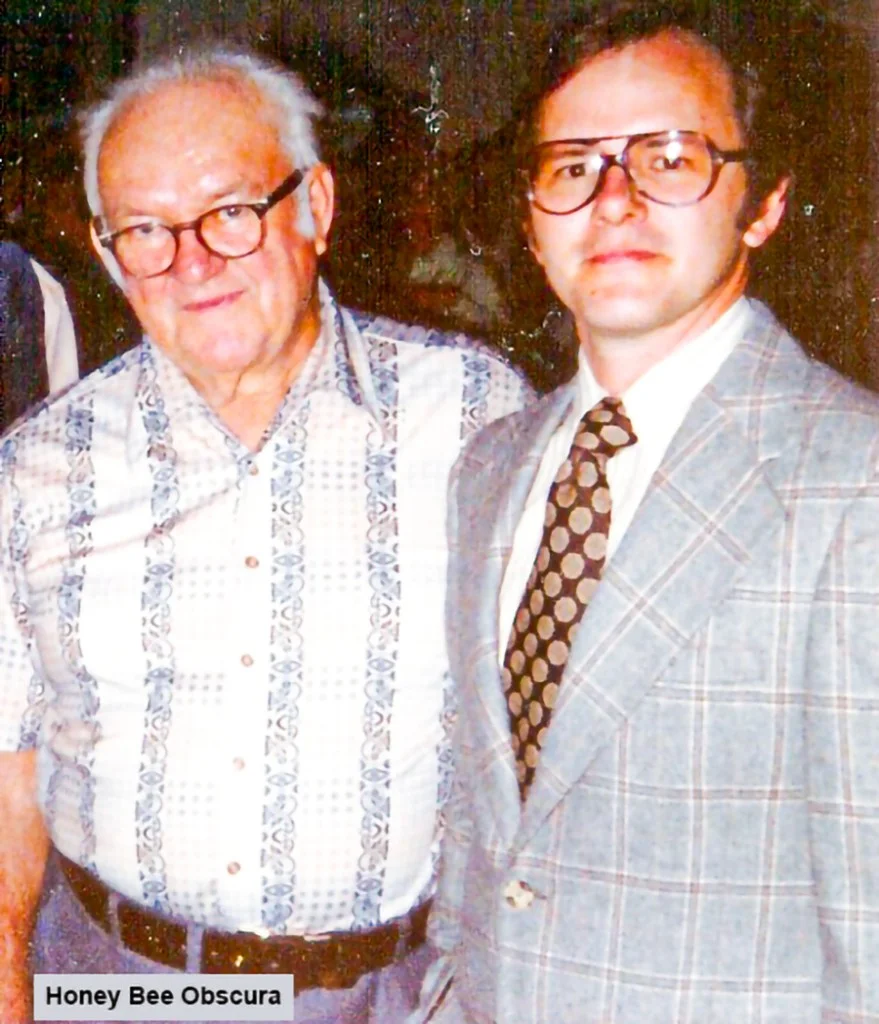
Beekeeping’s celebrated names are well recorded. The quieter contributors are harder to find once their friends and fellow beekeepers are gone. Tew remembers an Ohio state bridge engineer who supported beekeeping initiatives with his own money and was known as a sociable, committed beekeeper. He died suddenly. Fifteen years later, Tew had to search for anyone who still remembered him.
Clarence Eck, a lath-and-plaster worker in Wooster, Ohio, brought local beekeepers together for informal talks around the coal stove in his workshop. Those gatherings helped spark the Tri-County Beekeepers’ Association. Today its annual one-day meeting typically draws 600 to 1,000 people. Tew estimates that 15,000 to 20,000 beekeepers have attended over the years, yet he has found only one poor photograph of Eck.
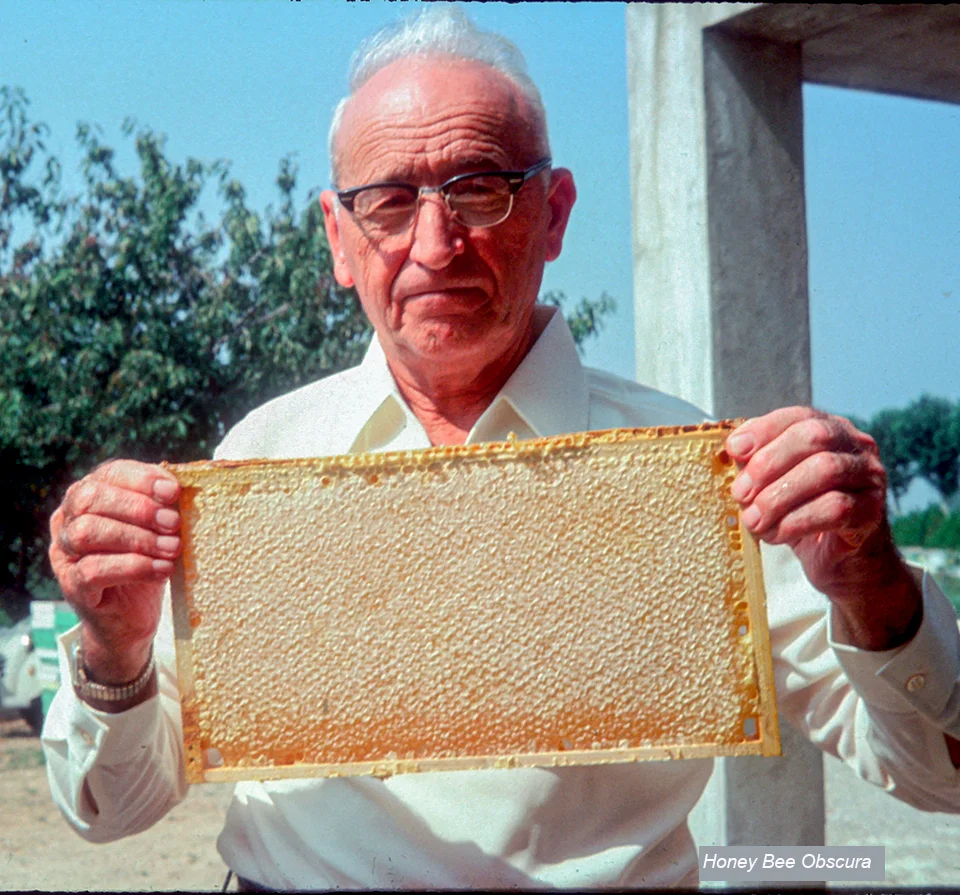
Another influential local beekeeper was a gentle, white-haired grade-school principal who kept a tidy apiary in his Ohio backyard, within sight of Interstate 71. He taught anyone who wanted to learn. His name is Charles Divelbiss, and the Eastern Apicultural Society presents an award in his honor. The people who remember him are growing older, too.
This is more significant than it looks. Thousands of people have made ordinary, lasting contributions to beekeeping without leaving much of a public record. There’s no national “Beekeepers’ Wall of Fame” to preserve their names. Tew’s point is that today’s beekeepers inherit work built by people they may never know—and future beekeepers will inherit ours. He wouldn’t choose to return to an earlier era, but he has come to value those largely forgotten predecessors who helped make productive beekeeping possible.
Different lives, familiar instincts
Tew offers no survey or scientific study of today’s beekeepers; his comparison rests on observation. The familiar traits remain: beekeepers want a large honey crop, explain away disappointing harvests, enjoy gadgets, and share advice freely. Their enthusiasm looks much like that found in older accounts.
Their backgrounds have shifted. A century ago, beekeepers were mostly connected to family farms. Today, they may work as airline pilots, physicians, automotive technicians, or building contractors, and they’re increasingly urban rather than rural. Agriculture itself has changed sharply, while the people who keep bees have become more varied.
Equipment offers a visible dividing line, though it’s not a measure of skill or commitment. Tew estimates that about half the people in a group will raise their hands when asked whether they use plastic frames and hive parts. Plastic equipment has competed with wood since the 1970s, and Tew says bees still seem to favor wood, even as plastic products improve.
He describes two broad tendencies. Traditional beekeepers stick mainly to wooden gear: wired frames with eyelets, wooden boxes joined and nailed together. Many still wire frames the way beekeepers have for generations. Tew learned that firsthand after casually asking in an earlier article whether frame wiring had become obsolete; readers made clear they had no intention of giving it up.
Modern beekeepers are more likely to use plastic frames, foundation, bottom boards, and boxes, and to treat Varroa mite control as a routine part of the job. They’re often newcomers, though not always. Tew himself prefers wood frames but lacks the time to assemble them and the money to hire someone, so he uses plastic. That puts him somewhere between the two camps.
There’s no need to crown a winner. Some people value tradition; others mainly want bees to pollinate a garden. Plastic changes how equipment is made, Tew argues, but not the basic work of beekeeping. Given time, today’s unfamiliar smell of new plastic may become a source of nostalgia for another generation.
Some things stay with you
For Tew, scent is one of beekeeping’s most durable constants: a smoker running low, fresh pine, new beeswax foundation, or the dense mixture of old equipment, dead bees, propolis, and wax in a storage barn. He calls that mixture the “essence of the storage building.”
Goldenrod honey coming into a hive still carries the same smell. Tew’s first encounter with it nearly convinced him that his colonies had American foulbrood. Freshly extracted honey and fermenting honey have their own familiar odors. Across a century of changes, these sensory details may be among the things that have moved least.
Bees follow old patterns; their pressures have changed
Swarming, queen replacement, stinging, overwintering, and nectar hoarding still follow much the same biological rules. Some flowers still depend on bees for pollination. But modern bees don’t look exactly like their predecessors: selective breeding has produced bees that are generally gentler, larger, and sometimes more colorful than the small, dark, aggressive bees of a century ago.
Commercial pollination is another major shift. Earlier beekeepers moved colonies mainly to produce honey, with less need or understanding of supplemental pollination. Long-distance colony transport to pollinate crops is now a central part of commercial beekeeping’s survival.
Bee health, meanwhile, has become a harder problem. A hundred years ago, beekeepers fighting American foulbrood might resort to burning infected equipment and colonies. Varroa mites and small hive beetles were unknown to them. The range of pests beekeepers must manage has expanded, and Tew counts that as one of the century’s clearest setbacks.
So, are beekeepers better off?
Some parts of the work have improved, including extraction equipment and the opportunities created by pollination services. Beekeepers’ basic interests and much of bee biology remain familiar. The hardest continuing tasks are managing new pests and finding people to take up the work as others leave it. Overall, Tew sees striking continuity in both beekeepers and their bees, alongside real changes in equipment, agriculture, and disease pressure.
He closes with a passage from Burroughs’ Birds and Bees – Sharp Eyes and Other Papers (1887):
“Men may degenerate,” says an old traveler, “may forget the arts by which they acquired renown; manufactories may fail, and commodities be debased, but the sweets of the wild-flowers of the wilderness, the industry and natural mechanics of the bee, will continue without change or derogation.”
Thank you for reading. Tew says he enjoys writing this monthly piece.
Dr. James E. Tew
Emeritus Faculty, Entomology
The Ohio State University
[email protected]
Host, Honey Bee Obscura Podcast
www.honeybeeobscura.com

Discussion
Sign in to join the discussion.