More colonies can mean less time per hive and no extra honey. The right apiary size depends on what a beekeeper can care for and enjoy.
Click Here if you listened. We’d love to know what you think. There is even a spot for feedback! Read along below!
By: David Burns
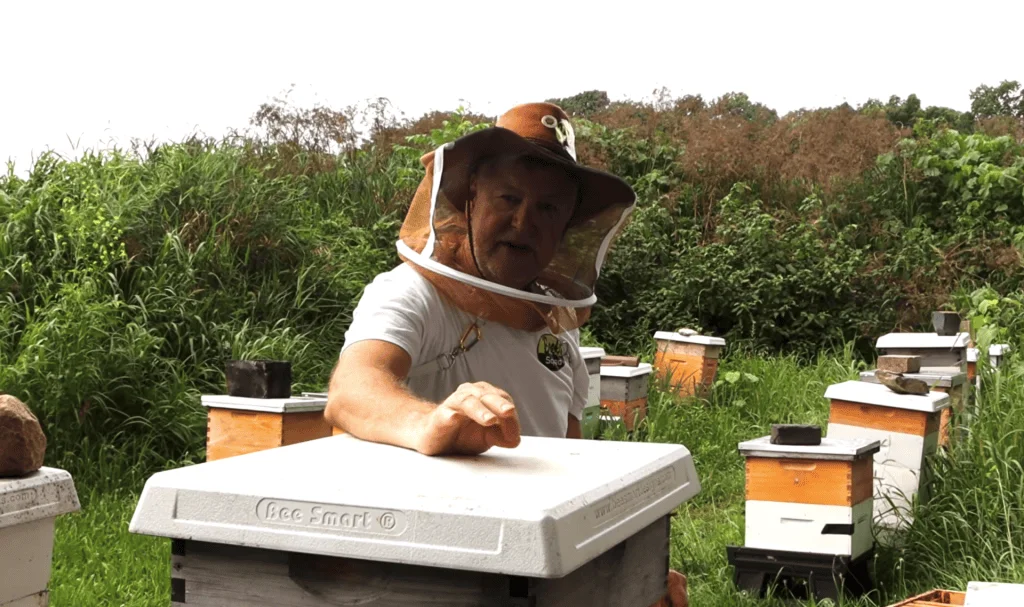
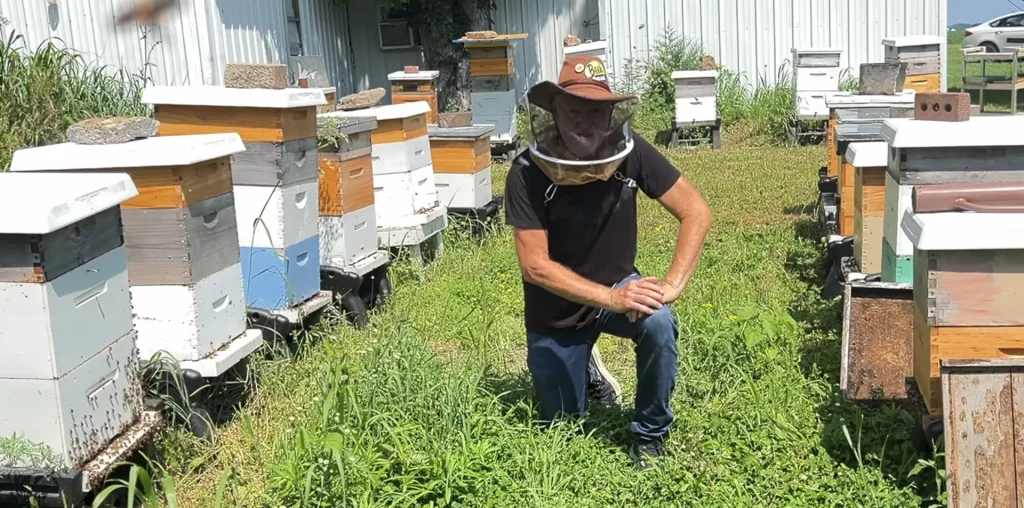
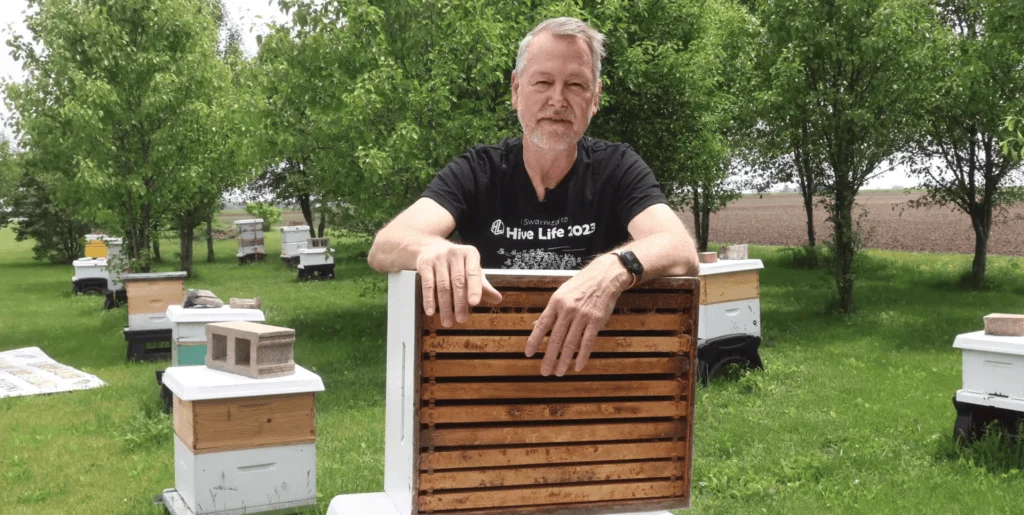
More hives can mean less attention per colony
My early years in beekeeping taught me a simple lesson, or so I thought: if I wanted to become a better beekeeper and produce more honey, I needed more colonies. I began with one hive, then added another, then kept expanding. Before long, I had a hundred. The growth felt like progress. The work of managing that many colonies showed me the other side of the equation: each additional hive claims time, and time is what lets a beekeeper notice trouble before it spreads.
There isn’t one path to a larger apiary. Hobbyists often begin with a colony or two, then find themselves adding hives after splits, swarms, or a good season. A beekeeper may collect a nearby swarm and suddenly have several colonies to accommodate. Others add hives with a specific purpose: producing enough honey to sell, raising queens, or making nucs. The number can grow through deliberate planning or through a run of opportunities that seem too good to pass up.
Colony count can also carry meaning among beekeepers. Hearing that someone keeps a hundred or five hundred hives may lead others to assume that person has extensive experience. A large operation may indeed reflect skill, particularly when the beekeeper maintains healthy colonies year after year. But buying equipment and stocking an apiary can make the first jump in numbers. Keeping those colonies alive and productive over time is a different test.
The demands change with scale
Beekeepers often describe hobby operations as having one to 50 colonies, sideline operations as 51 to 500, and commercial operations as more than 500. Those categories point to very different workloads and goals. A sideline beekeeper might serve honey customers while also selling nucs or queens, or provide colonies for pollination. Many do this largely on their own, sometimes alongside a full-time job. Managing hundreds of colonies under those conditions requires substantial time and careful scheduling.
Some beekeepers continue to grow beyond 500 colonies while still working as a one-person operation. That takes exceptional organization and energy. The number alone, though, doesn’t tell us how well the colonies are managed or whether the beekeeper finds the work sustainable. Scale makes sense when it serves a purpose and the beekeeper has the capacity to meet the needs that come with it.
My own experience made the tradeoff plain. As my apiary expanded, I had less time to inspect every colony closely. I also had a full-time job and a family, so beekeeping competed with other responsibilities. With fewer than five hives, I could keep track of which colony might need a new queen or where mite counts were rising. At 20, it took more effort to catch swarming risks and test or treat for mites. At 100, I often found myself prioritizing the weakest hives and reacting to problems rather than giving each colony the attention it needed.
Honey production isn’t just a numbers game
More colonies didn’t bring me more honey in a straightforward way. The extra hives added work and equipment costs, but the harvest didn’t rise in proportion. With fewer than 20 colonies, I had more room to observe how individual hives behaved and learn from those differences. Somewhere between 25 and 50, that deliberate attention began to slip. I still knew how to manage bees; I simply had less time to apply that knowledge to each colony.
That gap matters because a poorly managed hive is unlikely to produce much honey. Fewer colonies may allow a beekeeper to keep them stronger, and they may face less competition for forage. Those are possible explanations for why a smaller operation can match or even exceed the honey output of a larger one. The point isn’t that every beekeeper should keep fewer hives. Sideline and commercial beekeepers have good reasons to operate at scale, and many manage large apiaries successfully. The practical question is whether the available time, labor, and systems are enough for the number of colonies.
There’s also a material cost to expansion. More hives require more boxes, frames, bottom boards, and covers, among other supplies. Buying equipment can feel like a natural part of growing an apiary, but the spending only makes sense if the colonies and the beekeeper can make productive use of it. Equipment on hand doesn’t replace regular inspections or decisions about queen quality, mites, and swarm prevention.
Choose a scale that leaves room to enjoy the work
I used to believe that doing what you love would make it feel less like work. Beekeeping has challenged that idea. I love working with colonies, but a larger apiary brought long days and demands that eventually crowded out the enjoyment. I began reducing my numbers to better match the time I could give them.
Starting small has its own limitations. With only one or two colonies, there’s little basis for comparing their behavior, and experimenting can feel risky because each hive matters so much. A few more colonies can make it easier to learn through observation. But that benefit can fade when expansion leaves too little time to observe them well.
The right number depends on the beekeeper’s goals, schedule, and tolerance for the workload. For one person, that may be five colonies; for another, ten, fifty, or 500. No fixed count captures the difference between a beekeeper who has time and systems for a large operation and one who is already stretched by a much smaller apiary.
My measure of a useful apiary is changing. It isn’t how many hives I can fit on my property, or how many pieces of equipment I can buy. It’s how many colonies I can keep healthy while still having time for family, other interests, and the parts of beekeeping that made me start. The number worth aiming for is the one that leaves enough attention for the bees—and enough enjoyment for the beekeeper.

Discussion
Sign in to join the discussion.