Chocolate risk depends on the methylxanthine dose, the amount eaten and the animal’s health. A careful assessment guides monitoring and treatment.
Chocolate exposure is a frequent call for veterinary poison control, and the key clinical decision is how much theobromine and caffeine an animal has consumed. In 2025, chocolate was the most common food exposure reported to ASPCA Poison Control, the fourth most common exposure overall, and involved 13.6% of all calls. The risk varies with the product, the quantity eaten, the patient’s body weight and health, and the signs already present.
For dogs and cats, those details matter more than the label “chocolate” alone. Methylxanthines can stimulate the nervous and cardiovascular systems, while chocolate’s fat and sugar can trigger gastrointestinal problems. A dose estimate helps clinicians decide whether decontamination, hospitalization, or supportive care is appropriate. With timely assessment and care tailored to the patient, the prognosis is generally good.
Different exposure patterns in dogs and cats
Cats are more sensitive than dogs to theobromine by median lethal dose: 200 mg/kg in cats, compared with 250 to 500 mg/kg in dogs. For caffeine, the reported median lethal doses are similar: 100 to 150 mg/kg for cats and 140 to 150 mg/kg for dogs. These figures describe lethal-dose estimates; they do not replace assessment of a particular exposure or predict an individual patient’s outcome.
Despite their sensitivity, cats less often develop significant signs after eating chocolate. They generally show less interest in sweet human foods, in part because cats lack sweet taste receptors. Large ingestions are uncommon, but a substantial exposure can still be dangerous, so clinicians should assess the dose rather than assume a cat is safe.
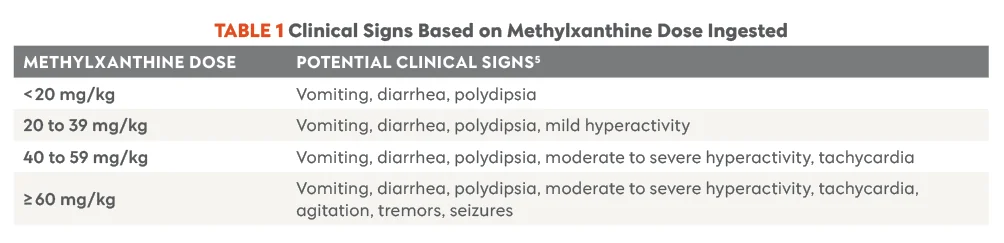
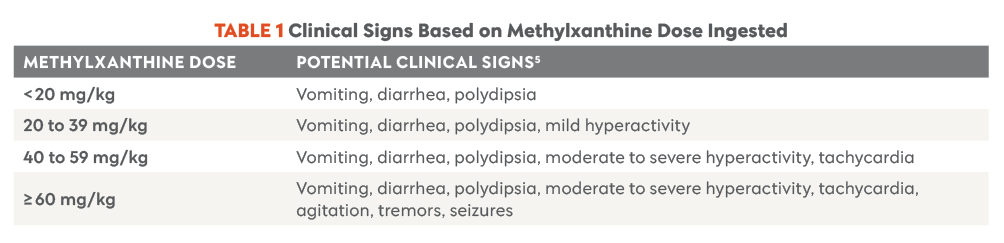
Signs linked to methylxanthines depend on the amount consumed. Gastrointestinal upset can occur, and higher doses may cause hyperactivity, a rapid heart rate, tremors, or seizures. Chocolate can also cause problems independent of its stimulant content. Its fat and sugar may contribute to pancreatitis, while a large volume can cause food bloat. Chocolate can draw water into the gastrointestinal tract, potentially leading to osmotic diarrhea and dehydration.
Build the dose estimate from the product
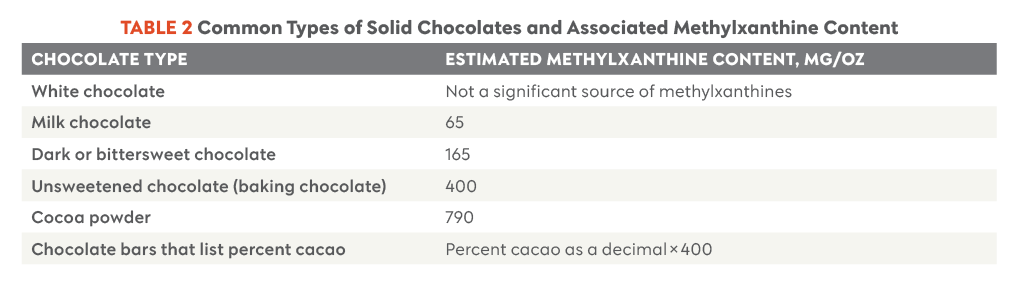
Estimating the methylxanthine dose is often the most demanding part of the assessment. Product labels may not state the relevant concentrations, so clinicians commonly use average estimates. The calculation has three steps: estimate the product’s methylxanthine content in milligrams per ounce, multiply by the ounces eaten, then divide the total milligrams by the animal’s weight in kilograms. The result is the estimated dose in mg/kg.
For a 20-kg dog that eats a 1.55-ounce milk chocolate bar, an estimate of 65 mg per ounce gives a total of 100.75 mg, or about 5 mg/kg. A 5-kg dog eating 3 ounces of a 72% cacao dark chocolate bar faces a very different estimate: 72% multiplied by 400 mg per ounce gives 288 mg per ounce. Three ounces yields 864 mg, or 172.8 mg/kg.
Recipes can make the math less direct, but the same method applies. If a 10-kg dog eats half a pan of brownies made with 2.1 ounces of cocoa powder, and cocoa powder is estimated at 790 mg per ounce, the entire pan contains about 1,659 mg. Half the pan represents about 829.5 mg, or 83 mg/kg for the dog.
When a product lists its cacao or cocoa percentage, the estimate for solid chocolate can be calculated as percentage multiplied by 400 to obtain mg per ounce. For a candy with a nonchocolate filling, a common estimate is that roughly one-third of the product is chocolate, though the actual proportion varies. For homemade baked goods, obtain the recipe, identify every chocolate source, and determine what fraction of the full batch the animal ate.
The history should also establish whether the product contained other substances that could pose a separate concern, including xylitol, raisins, THC (tetrahydrocannabinol), or psychoactive mushrooms. This information can change the clinical assessment even when the chocolate dose is known.
Decontamination should follow the risk assessment
Decontamination is a decision, not an automatic response. It may be considered when the estimated methylxanthine dose reaches 40 mg/kg or more, or when the animal ate enough chocolate to risk substantial gastrointestinal effects or food bloat. The potential benefit must be weighed against the risks for that patient.
Emesis may recover about 40% to 60% of stomach contents and can be useful after a large ingestion, including up to eight hours after the event. It may be considered for a patient with an estimated dose above 40 mg/kg if the patient has not vomited spontaneously and is not showing stimulant signs. The patient’s presentation and timing inform whether it is appropriate.
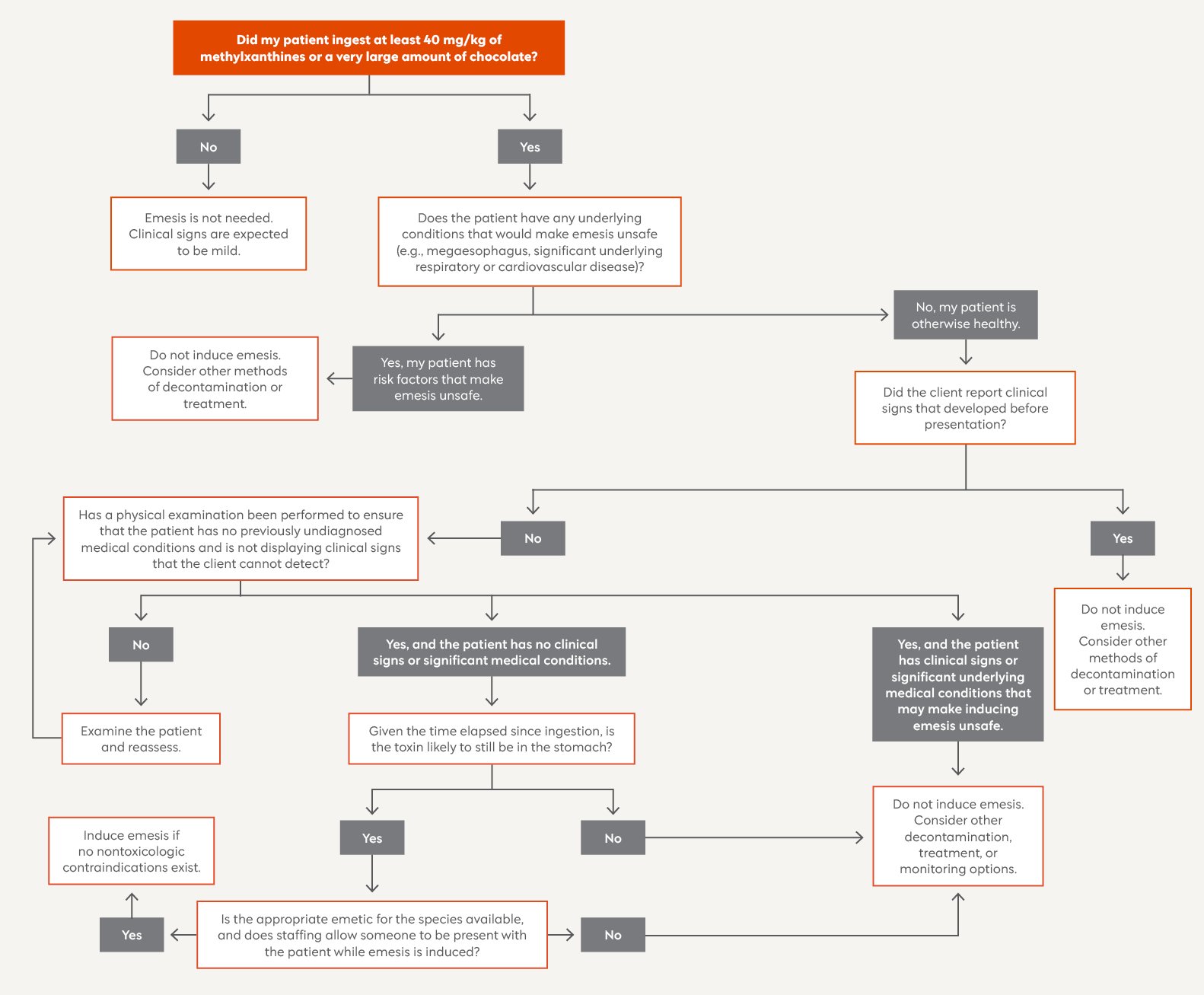
Figure 1. Is my patient a good candidate for induction of emesis after chocolate ingestion?
Activated charcoal calls for particular caution. Chocolate can already contribute to gastrointestinal fluid loss, and charcoal is hygroscopic. Some formulations also include an osmotic cathartic, raising the possibility of severe diarrhea and fluid shifts that can lead to hypernatremia. The article recommends considering charcoal for asymptomatic, well-hydrated patients whose estimated dose is at or above the median lethal dose. Patients receiving it should be monitored for hemoconcentration and hypernatremia, signs that can resemble methylxanthine toxicosis.
Treatment and patient-specific considerations
Hospitalization and monitoring are appropriate to consider when the estimated dose remains above a level of concern after accounting for emesis. Treatment depends on the animal’s signs. Care may include fluids to maintain hydration and antiemetics to control vomiting. Benzodiazepines or acepromazine can help manage hyperactivity; persistent tachycardia after stimulant signs are controlled may be treated with beta-blockers. Benzodiazepines or methocarbamol may be used for tremors, and seizures may require antiseizure medication.
Underlying disease can affect how a patient tolerates the exposure. Animals with a history of pancreatitis after dietary indiscretion or abnormal lipid metabolism may be more prone to acute pancreatitis. The article advises considering hospital-induced emesis for these patients and close observation at home for signs associated with pancreatitis.
Significant cardiac disease does not necessarily make stimulant signs more likely, but it can make them harder to tolerate. Because tachycardia is common, patients with cardiac disease may have less capacity to compensate for changes in cardiac output. Those with congestive heart failure warrant close monitoring when the estimated dose raises concern.
The practical takeaway is to establish what was eaten, how much, and when; calculate a dose using the best available product estimate; and account for the animal’s symptoms and medical history. That sequence helps clinicians choose proportionate monitoring and treatment, while avoiding interventions whose risks may outweigh their value.
Discussion
Sign in to join the discussion.