New allergy therapies expand options for canine atopic dermatitis, but treatment choice depends on each dog’s health, response, cost and owner’s ability to maintain the plan.
Canine atopic dermatitis is common, chronic and manageable, but it isn’t curable. That distinction matters: the goal is a treatment plan a dog can stay on, and that an owner can sustain. No single drug suits every patient. Comorbidities, other medications, past responses, cost and the owner’s ability to follow the plan all shape the choice.
The options have expanded. Three newer allergy therapies—ilunocitinib, atinvicitinib and tirnovetmab—have been approved for dogs over the past two years, joining established treatments such as oclacitinib, lokivetmab, cyclosporine and allergen-specific immunotherapy (ASIT). Each has trade-offs. Good communication and clinical judgment matter as much as the drug itself.
Janus Kinase Inhibitors
Janus kinase inhibitors, or JAKinibs, can relieve allergic itch quickly. That makes them useful for both acute flares and chronic disease, particularly when a clinician wants rapid relief without corticosteroids. They may act faster than ASIT, antihistamines or cyclosporine. The trade-off is a risk of secondary infections, reported across the class.1-6 U.S. FDA labels for all three approved products also report neoplastic conditions; they do not claim that treatment increases the risk of neoplasia.
Veterinary JAKinibs are classified as immunomodulators. They act on JAK enzymes located inside cells, alongside cytokine receptors, and can alter several downstream biological effects. The effects depend in part on which enzymes are targeted: JAK1, JAK2, JAK3 or tyrosine kinase 2 (TYK2).4-7
The Role of Selectivity
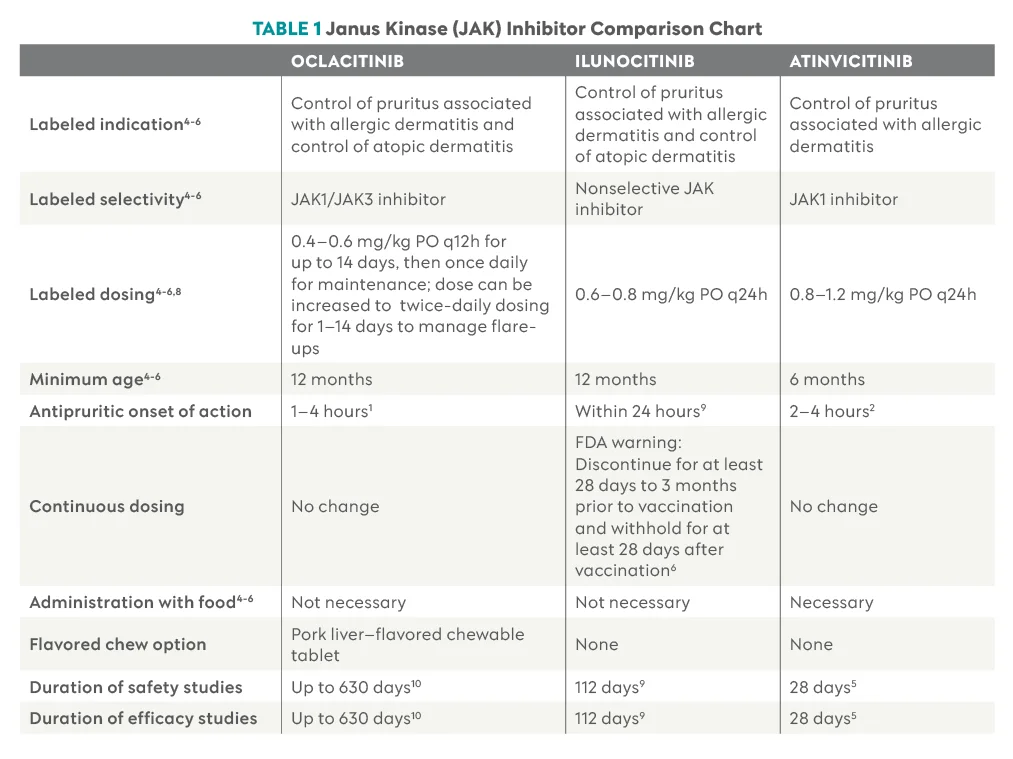
Oclacitinib was FDA-approved in 2013. The arrival of ilunocitinib and atinvicitinib has put a sharper focus on JAK selectivity and how the drugs compare (Table 1).
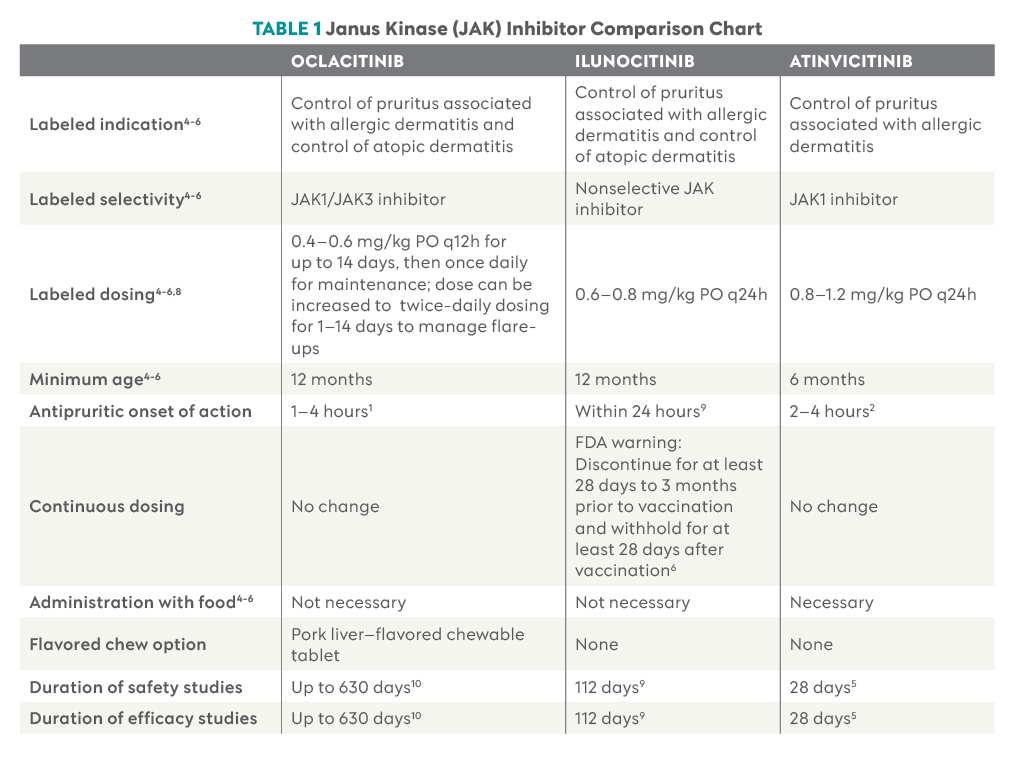
Oclacitinib selectively inhibits JAK1- and JAK3-dependent enzymes involved in allergy and inflammation, including those associated with interleukins (IL) 2, 4, 6 and 13, as well as IL-31, which contributes to itch. It has little effect on JAK2, an enzyme involved in blood cell production.7 Ilunocitinib is labeled a nonselective JAKinib, with high potency against JAK1, JAK2 and TYK2.6 In theory, that broader activity could affect a wider range of cytokines, including ones involved in hematopoiesis. Atinvicitinib has shown high selectivity for JAK1 and is marketed as a “second-generation” JAKinib.11
Here’s the thing: selectivity alone doesn’t establish that one drug is safer or more effective. The theory is that greater JAK1 selectivity could improve safety, but selectivity is not currently a reliable predictor of safety or efficacy in either human or veterinary medicine.12,13 Human medicine still lacks enough evidence to settle how much selectivity matters for patient safety.12
Available selectivity estimates come from cell- and enzyme-based models. Ex vivo evidence is lacking and could produce different results.7,11,13,14 A dog’s response may also depend on dose, pharmacokinetics, dosing frequency, the range of cells affected and other factors.15 So a ranking based on selectivity alone would claim more than the data support.
Head-to-Head Studies
One noninferiority study found ilunocitinib no worse than oclacitinib for controlling itch in dogs with atopic dermatitis.9 By day 84, 90% of dogs receiving ilunocitinib had reduced pruritus by at least 50%, compared with 72% receiving oclacitinib. Using an owner-rated itch score below 2 out of 10 as the definition of remission, the rates were 77% and 53%, respectively. Investigators also found that a statistically greater share of dogs in the ilunocitinib group achieved at least a 50% reduction in dermatitis from baseline.
Those results are encouraging, but they come from one comparison. No published head-to-head study has compared atinvicitinib with either ilunocitinib or oclacitinib. More clinical experience and prospective research are needed to clarify differences in safety and efficacy—and which patient characteristics might explain them.
Long-Term Administration
Oclacitinib has a much longer record of use than the newer JAKinibs, with independent studies and pharmacovigilance monitoring spanning more than 10 years.16-18 In a prospective, open-label study of chronic Apoquel (Zoetis) use, dogs received treatment for up to 630 days, with a mean of 407 days. More than 91% showed a positive effect on quality of life, and the study found no serious adverse events attributable to oclacitinib.10
Over five years of pharmacovigilance monitoring covering more than 91 million dogs, the estimated rate of reported adverse events was fewer than one animal per 10,000 treated.18 Reported events include vomiting, diarrhea, lethargy, reduced appetite, leukopenia, aggression, unspecified skin disorders and papilloma. These figures provide useful context, though they don’t remove the need to monitor an individual dog.
The evidence for the newer drugs covers much shorter periods: up to 112 days for ilunocitinib and 28 days for atinvicitinib.5,9 Their long-term safety in dogs therefore remains less established. Reported adverse events with ilunocitinib include gastrointestinal upset, lethargy, urinary tract infection and reduced appetite. Reports for atinvicitinib include gastrointestinal upset, otitis externa, blood in the urine and bacterial skin infection. Abnormal bloodwork—including leukopenia, elevated liver values and high cholesterol and/or triglycerides—has been reported with all JAKinibs.4-6
Vaccination is another point to discuss with owners considering ilunocitinib. After initial laboratory findings in vaccine-naïve puppies given three times the labeled dose, the FDA added a black box warning that an inadequate immune response to vaccines could occur. The label advises stopping ilunocitinib at least 28 days before vaccination and withholding it for at least 28 days afterward.6
A later study in previously vaccinated dogs found that the same three-times-labeled dose did not significantly weaken antibody responses to booster vaccines for adenovirus type 2, parvovirus, distemper virus or rabies.19 The findings are not identical in population or context, so the FDA warning still calls for an informed conversation with the owner about whether to pause treatment around vaccination.
Anti–IL-31 Monoclonal Antibodies
IL-31 is a key itch-driving cytokine in canine allergic dermatitis, making it a direct target for symptom control. Lokivetmab, a caninized monoclonal antibody (mAb) that binds and neutralizes IL-31, was licensed in 2016 for allergic and canine atopic dermatitis. Tirnovetmab received the same indications in 2026 and works by the same general mechanism, although it binds a different site on IL-31. In clinically treated dogs with allergic dermatitis, both can reduce itch within 24 hours.20,21
Dosing Frequency
Lokivetmab is labeled for dosing every four to eight weeks.21 Tirnovetmab can provide itch relief for six to eight weeks, though it may be administered as often as every four weeks.22 In long-term lokivetmab studies, the interval needed varied among dogs: about 45% required treatment every four to five weeks, 40% every six to seven weeks, and 15% every seven to eight weeks.23,24
Safety and Efficacy
Preliminary safety information for tirnovetmab is comparable to lokivetmab’s, including no restrictions based on age or concurrent medications.21,22 The adverse events most often reported with either antibody are also similar: injection-site sensitivity, dermatitis, bacterial skin infection, vomiting, diarrhea and lethargy. They are relatively infrequent.21,22
Lokivetmab has several studies supporting long-term use, with no serious adverse-event concerns reported.23-25 It maintains itch control in most dogs, although up to 17% have been reported to lose response over time. Studies also report high client satisfaction and reduced reliance on other medications.23,25
Direct prospective comparisons of lokivetmab and tirnovetmab are still needed. Until then, there isn’t enough evidence to say whether one consistently works better than the other.
Corticosteroids
Use for Acute Allergy Flares
Oral corticosteroids can bring down an acute allergic flare quickly. For infrequent episodes, a short course of prednisone or prednisolone—initially 0.5 to 1 mg/kg by mouth every 24 hours, then tapered—can be a reasonable option, generally for courses of up to 30 days.
The speed comes with a cost. In one client-satisfaction study, 70% of owners said they would pay more for a treatment with fewer adverse effects. By day 14, 90% of dogs had experienced at least one adverse event; increased urination and thirst were most common. These effects occurred across dog sizes and even at tapered doses.26
That’s a strong reason to discuss nonsteroidal choices, including JAKinibs and anti–IL-31 mAbs, when treating a flare. Long-acting injectable corticosteroids aren’t recommended, even for acute episodes.27
Chronic Use
Long-term oral corticosteroids are generally a poor fit for atopic dermatitis because of potential adverse effects, including recurrent urinary tract infections, liver disease, diabetes and skin changes such as a poor hair coat, calcinosis cutis, comedones and skin thinning.
When possible, topical corticosteroids—such as hydrocortisone, triamcinolone, betamethasone or mometasone—can reduce systemic exposure. But regular, prolonged application can still cause skin atrophy. Owners should understand these risks, and clinicians should aim for the lowest effective dose and dosing frequency when chronic steroid use is necessary.
Cyclosporine
Cyclosporine has been approved for canine atopic dermatitis for more than 20 years. It inhibits calcineurin, reducing T-cell activity and IL-2, and can provide effective, relatively safe long-term control.28,29 Its main limitation is speed: it usually takes four to six weeks to control disease, so it won’t address a sudden flare on its own.30 A three-week prednisone taper, starting at 0.5 to 1 mg/kg by mouth every 24 hours, is often recommended while cyclosporine takes effect.
Faster options such as JAKinibs and mAbs may have reduced how often clinicians reach for cyclosporine. Still, some dogs may respond to it when those treatments don’t adequately control allergy, possibly because the drugs work through different mechanisms. Clinicians have also reported that cyclosporine’s anti-inflammatory effect can help with pododermatitis, including interdigital furunculosis, which may occur alongside atopic dermatitis.
Adverse Events and Drug Interactions
Its delayed onset isn’t the only drawback. Cyclosporine can cause gastrointestinal upset, increase the incidence of urinary tract infections and lead to gingival hyperplasia. It also interacts with multiple drugs that are P-glycoprotein substrates or are metabolized by cytochrome P450.31
Advantages
Some dogs can maintain control with cyclosporine every other day, or less commonly twice a week; even when that isn’t possible, daily dosing may be reduced for some patients.27 An oral liquid is also available. It permits more precise dosing at 5 mg/kg, makes dose adjustment easier than with capsules and offers an option for dogs that won’t take pills.
Allergen-Specific Immunotherapy
ASIT is the only treatment for canine atopic dermatitis that targets its underlying cause and changes the disease process.32 Its mechanism isn’t fully described. In dogs that respond, studies have observed increases in regulatory T cells (FoxP3+CD4+), IL-10 and immunoglobulin G4, alongside a decrease in IgE.33
There are four ways to give ASIT: subcutaneous injection, under the tongue, into a lymph node or through the skin.
Formulations
Subcutaneous injections are the longest-used form in veterinary dermatology, with success rates generally reported between 60% and 70%, though estimates vary by study. Protocols differ, with injections given every one to four weeks.32 Sublingual immunotherapy is given daily and offers an alternative for owners who are uncomfortable administering injections.
Research in recent years has also examined monthly intralymphatic treatment.34 Published descriptions typically involve an aluminum precipitate adjuvant and ultrasound-guided injection into the popliteal lymph node. That setup can make the method difficult to use as a routine treatment in general practice. Daily epicutaneous, or transdermal, immunotherapy applied to the inner ear flap has been described in an unpublished study; preliminary results suggest it was safe and effective in dogs with atopic dermatitis.35
The choice of formulation can depend on availability, the clinician’s training and experience, the dog’s tolerance, owner follow-through and cost. Allergen selection should be based on intradermal testing and/or allergy serology, alongside the dog’s seasonal pattern and likely exposure in its geographic region.
Referral to a board-certified veterinary dermatologist is strongly recommended when pursuing ASIT.8 Follow-through can be difficult in general practice: nearly one-third of owners don’t refill immunotherapy after receiving the initial vials.36 Regular veterinary follow-up is associated with a significantly higher success rate, so owner education needs to set clear expectations and explain the treatment’s value.37,38 Even with that support, ASIT won’t suit every client.
Expectations
ASIT takes time. Initial improvement may not appear for three to nine months, and treatment should continue for at least 12 months before judging its overall effect. Other allergy medications may be needed for symptom relief while ASIT is building up.27
Possible adverse reactions include rare anaphylaxis—with signs such as angioedema, hives, collapse, difficulty breathing, vomiting or diarrhea—as well as increased itch, a localized injection-site reaction and gastrointestinal signs.
Choosing Drugs for Control of Acute Pruritus
Stop the flare, then build the plan
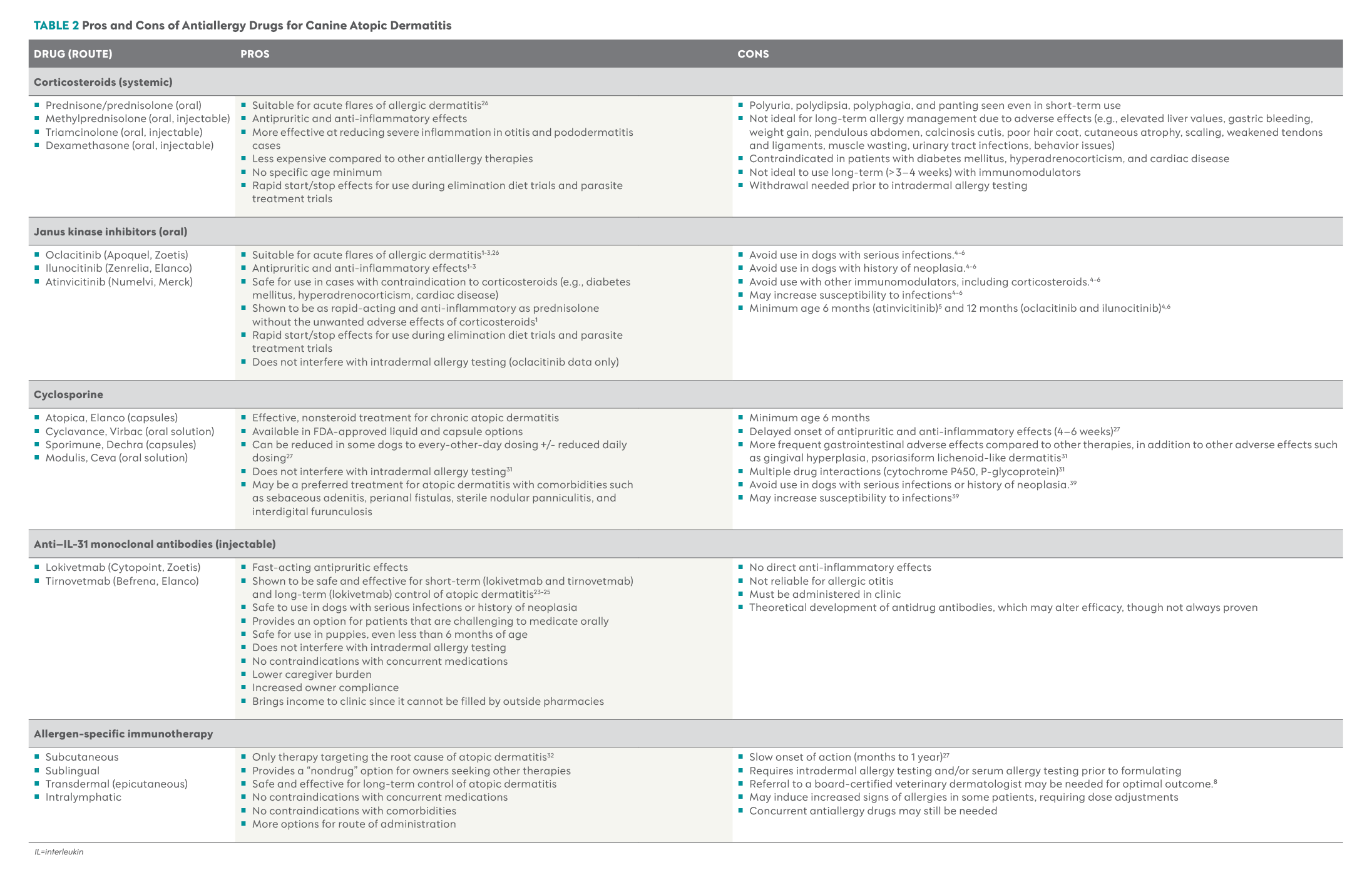
For an acute allergic flare, speed matters—and so does avoiding side effects that make treatment harder for the dog and its owner. JAK inhibitors and anti–IL-31 monoclonal antibodies are often the better starting point than systemic corticosteroids. When inflammation is moderate to severe, JAK inhibitors may have an edge because they act on a wider range of proinflammatory cytokines. Box 1 lists the drugs used for acute flare-ups; Table 2 compares the benefits and drawbacks of the available classes.
- Oclacitinib
- Ilunocitinib
- Atinvicitinib
- Lokivetmab
- Tirnovetmab
- Corticosteroids (oral or topical)
*Cyclosporine and allergen-specific immunotherapy are not suitable for acute allergic flare-ups, although they can be successfully used for chronic atopic dermatitis.
Steroids can still be the practical choice when cost is a major constraint or when severe pododermatitis or otitis is involved—for example, ceruminous gland hyperplasia or canal ulceration. A tapering course of prednisone or prednisolone may suit those cases. The trade-off is familiar: increased urination, thirst, and appetite can be disruptive for owners. Cyclosporine works too slowly for an acute episode, though it may help when JAK inhibitors or anti–IL-31 antibodies have failed, or when another skin condition, such as interdigital furunculosis, is present.
Chronic care needs room to change
After confirming atopic dermatitis, the veterinarian and owner need to agree on a long-term approach. Continuing a JAK inhibitor or anti–IL-31 antibody may make sense; allergen-specific immunotherapy (ASIT) may be a better fit for many dogs. The choice depends on the dog’s age, whether signs vary by season, other medications and health conditions, how reliably the plan can be followed, its ongoing cost, and the owner’s understanding of benefits and risks under clinical experience and product labeling.
There’s no set-and-forget regimen here. Atopic dermatitis changes over time, and treatment often needs adjustment—sometimes to more than one medication. Regular check-ins and clear communication help keep the plan aligned with the dog’s symptoms and the owner’s capacity to carry it out.8
Most dogs need more than one tool for chronic control. The clinician has to know where each main treatment fits, and what the evidence says about combining them:
- JAK inhibitors: Never use two drugs from this class at the same time. Oclacitinib and cyclosporine have been used together for up to 21 days without serious adverse events, but evidence does not support continuing that combination long term.
- A prospective study tested a 60-day schedule pairing prednisolone (0.5 mg/kg by mouth once daily on two days each week) with oclacitinib (0.5 mg/kg by mouth once daily on two different days), leaving three drug-free days each week. The regimen controlled itch and inflammation and was considered safe. It was designed to lower the cost of oclacitinib over time and reduce reliance on systemic steroids.40 Other combinations of a JAK inhibitor with systemic corticosteroids have not been evaluated, so they should generally be avoided.
- Cyclosporine: Because it takes time to work, a short course of tapering prednisone at an anti-inflammatory dose can provide cover during the transition; this approach has been reported as effective and safe.27,30 Long-term use of both drugs lacks supporting clinical data and is not recommended. Oclacitinib can also overlap with cyclosporine for up to 21 days, but that pairing is not advised for ongoing treatment.41
- Anti–IL-31 antibodies: No specific restrictions are identified for combining these drugs with other medications, including JAK inhibitors, cyclosporine, or corticosteroids. One recent publication reported that lokivetmab plus oclacitinib could be recommended safely; as many as 61% of dogs achieved treatment success after an inadequate response to either drug alone.42
- ASIT: No drug interactions are reported between ASIT and individual antiallergy medications. During the buildup phase, most atopic dogs still need symptom relief from one or more drugs. With time, ASIT may make it possible to stop those medications or reduce their doses.
The practical takeaway
Veterinarians now have a wider set of systemic options for canine atopic dermatitis, which makes individualized treatment more possible—and more demanding. Owners need a clear account of the likely benefits, risks, costs, and limits of the FDA- and USDA-approved therapies under consideration. The right plan is the one the clinical team and owner can adapt as the disease changes.
The post Antiallergy Therapies in Canine Atopic Dermatitis: The Pros and Cons appeared first on Today's Veterinary Practice.
Discussion
Sign in to join the discussion.