Medication can lower panic enough for behavior therapy to work. Effective care often pairs daily anxiety treatment with departure-time support.
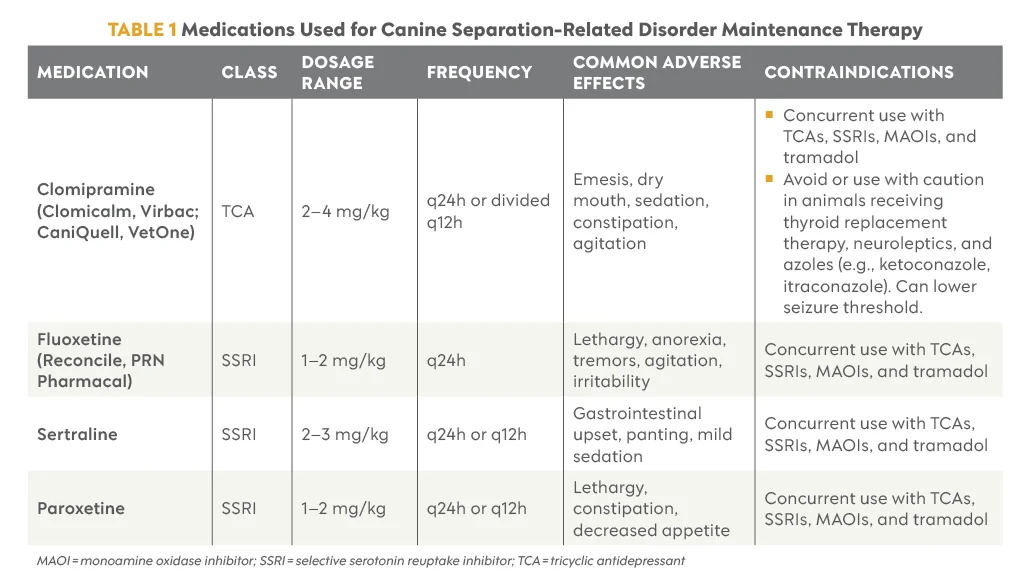
For dogs with separation-related disorders, medication can make behavior therapy possible. The central clinical challenge is panic: when departure cues trigger intense fear, a dog may be unable to retrieve familiar behaviors or learn new ones. Treatment therefore often pairs daily medication to reduce baseline anxiety with as-needed support around departures, alongside a behavior plan tailored to the individual dog.
That framing matters for clients, too. Destruction, house soiling, urine marking and vocalization during a person’s absence aren’t signs of spite or poor training. They can reflect a physiological panic response. Medication isn’t a quick fix or a substitute for behavior modification; it can lower the anxiety that blocks learning and help make the behavioral work effective.
Set expectations before treatment begins
Clients may worry that prescribing a psychotropic medication means they’ve failed their dog, or that the drug will leave the animal sedated and unresponsive. Veterinarians can explain that treatment addresses changes in brain chemistry, just as care for other organs addresses physiological problems. Clear, matter-of-fact communication can reduce stigma and support adherence.
Two expectations are especially useful to establish early: daily medications take time to reach their full effect, and finding the right drug can involve trial and error. Clients hoping for a visible change within days may stop treatment prematurely. The article advises explaining that the first month allows the brain to adjust, while the second is when the full effects of maintenance medication may start to become apparent. A daily journal can help owners spot gradual changes they might otherwise miss.
There’s no test that identifies the best medication for an individual dog. A veterinarian may need to adjust the dose, change drugs or try a different combination based on response and adverse effects. That uncertainty makes regular communication and consistent dosing part of the treatment itself.
Daily medication lowers baseline anxiety
Maintenance therapy uses medication every day to reduce a dog’s steady level of anxiety. Selective serotonin reuptake inhibitors (SSRIs) and tricyclic antidepressants (TCAs) are common choices. Both generally take several weeks to achieve therapeutic levels, and consistency matters: missed doses can disrupt the effect as the medication changes receptor activity over time. Adverse effects are most likely to appear during the first couple of weeks.
SSRIs increase the availability of serotonin by blocking its reuptake. With ongoing treatment, they can also help moderate overactive serotonin receptors. Fluoxetine is sold as Reconcile by PRN Pharmacal and is licensed to treat separation anxiety in dogs. Sertraline and paroxetine are also commonly prescribed. Possible adverse effects include temporary lethargy and reduced appetite. Starting at the lower end of the dose range and gradually increasing it may help clients follow the plan.
TCAs affect the reuptake of both serotonin and norepinephrine. They may suit some highly reactive dogs, but their anticholinergic effects can cause dry mouth, increased drinking, constipation or difficulty urinating. TCAs can also affect cardiac conduction and may increase seizure risk in susceptible animals.
Clomipramine is available as Clomicalm from Virbac and CaniQuell from VetOne; both products are licensed for canine separation anxiety. Amitriptyline has also been used, though the article describes it as a less favored first-line option because of its adverse-effect profile and limited efficacy.
Departure-time medication can cover the gap
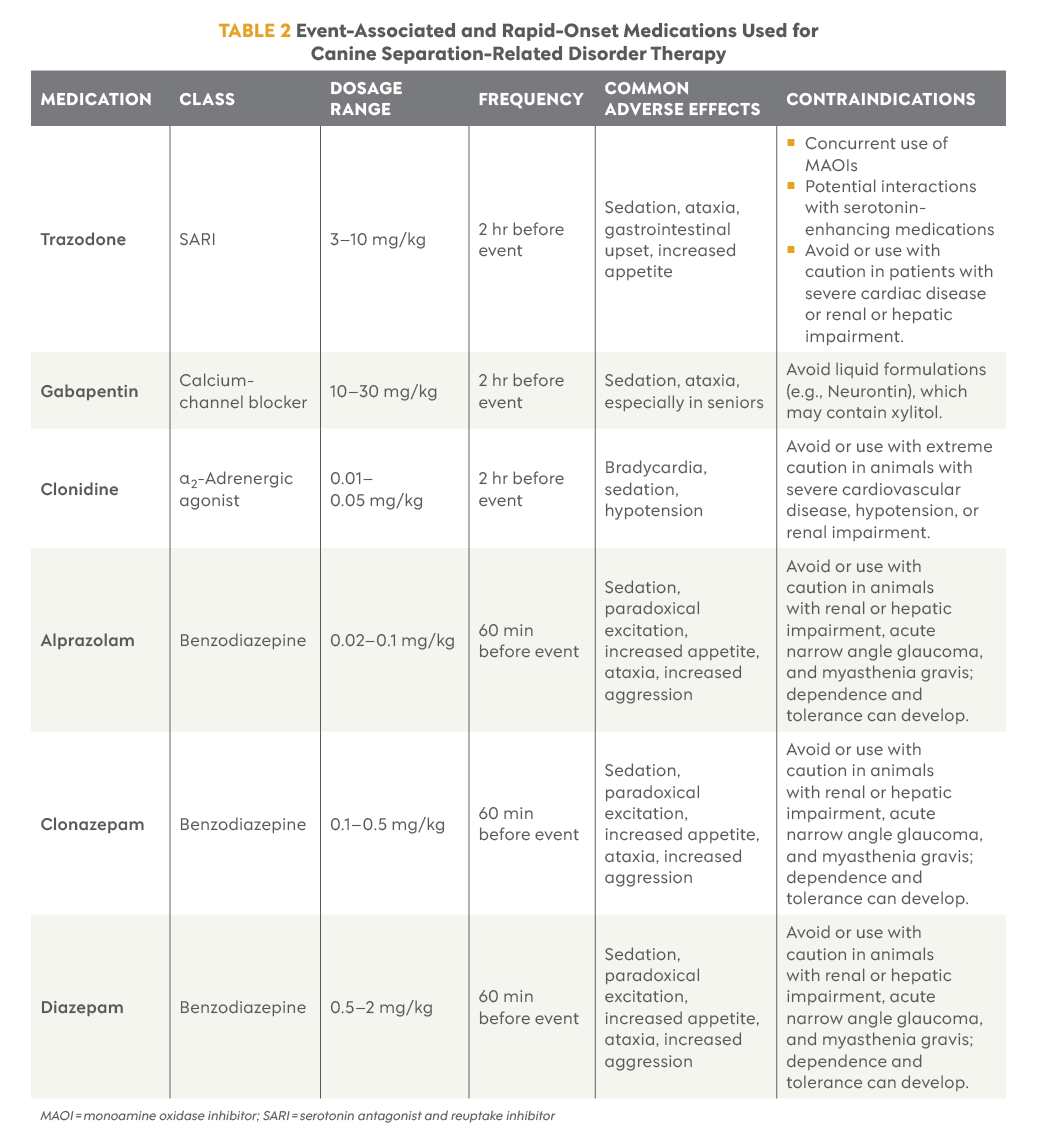
Daily treatment alone may not prevent a panic spike when an owner leaves, particularly early in care while maintenance medication is building toward its full effect. Situational medication is given as needed and timed to a departure. It can serve as a bridge during that period and may help blunt the acute response to separation cues. A test dose while the owner is home is recommended before relying on a medication for an actual departure.
Trazodone, a serotonin antagonist and reuptake inhibitor, is a familiar option for this purpose. Given 60 to 90 minutes before departure, it can provide relatively rapid anxiety relief. Its dosing range is wider than those typically used for SSRIs or TCAs.
Gabapentin is also used for departure-related events. Best known as an anticonvulsant and a treatment for neuropathic pain, it has shown promise for anxiety at higher doses. The source reports less sedation with gabapentin than with trazodone.
Clonidine is an alpha-2 adrenergic agonist that inhibits norepinephrine release, reducing the fight-or-flight response. Because it can significantly affect heart rate and blood pressure, its use calls for clinical attention to those effects.
Benzodiazepines such as alprazolam, diazepam and clonazepam may be considered when other event medications don’t work or can’t be used. They act on GABA-A receptors, but require caution. Long-term use can lead to physical dependence; some dogs may instead show paradoxical excitation or disinhibition, including hyperactivity or aggression. These drugs can also interfere with memory formation, making them a poor fit for active behavior-modification sessions in some cases. They may be useful when the dog does not remember the owner leaving.
Tasipimidine sulfate oral solution, sold as Tessie by Orion Animal Health, is described as newly licensed for separation anxiety and noise phobia in dogs, though it wasn’t yet available in the United States at the time of publication. It’s a selective full agonist of the human alpha-2A adrenergic receptor. The stated schedule is a dose one hour before a dog is left alone, with repeat dosing three hours later if needed, up to three times in 24 hours.
Combination treatment requires clinical judgment
Many dogs don’t respond adequately to a single medication. A veterinarian may combine drugs that work through different mechanisms—for example, daily sertraline with clonidine and gabapentin around departures. Other combinations, including an SSRI with trazodone or clomipramine, are also used, but carry a rare, serious risk of serotonin syndrome.
The risk is dose-dependent and most often arises when serotonin-enhancing medication is started, doses are raised, or drugs are combined. Signs can include agitation, tremors, elevated body temperature, rapid heart rate, dilated pupils and seizures. If these signs appear, the source advises stopping the medication and providing supportive care.
Common clinical signs:
- Agitation
- Tremors
- Hyperthermia
- Tachycardia
- Mydriasis
- Seizures
Weaning is an option, not a requirement
Medication doesn’t have to be lifelong for every dog, but some animals with chronic anxiety or additional diagnoses may need ongoing support to maintain a good quality of life. The article treats tapering as a goal when appropriate, not a measure of success that every case must meet.
Stopping abruptly can trigger rebound anxiety and a return of problem behaviors. The suggested approach is to reduce the dose by about 25% every four weeks, with the pace adjusted for how long the dog has been taking the medication. Owners should watch closely for early signs of anxiety at each step. If symptoms return, the taper should pause and the dog should return to the previous effective dose before a slower attempt is considered.
The practical takeaway is that medication and behavior modification work together: one helps lower the panic that prevents learning, while the other builds longer-term coping. For clinicians and clients, a realistic timeline, close observation and willingness to adjust treatment are central to helping dogs manage separation.
The post Pharmacologic Interventions for Canine Separation-Related Disorders appeared first on Today's Veterinary Practice.
Discussion
Sign in to join the discussion.