Parasites can cause persistent vomiting without diarrhea, especially in young pets. The right fecal test can help identify infections early.
Vomiting can be the only clue
A dog or cat that keeps vomiting may have a parasite, even if diarrhea and other typical signs are absent. That possibility is easy to miss: vomiting has many causes, and some parasites are better known for causing diarrhea. Yet fecal testing is often quick, inexpensive, and minimally invasive. For a patient without an obvious emergency such as a foreign body or toxin exposure, it belongs early in the diagnostic workup. Young animals can be especially difficult to assess. Vomiting has many possible causes, and several are more common in dogs under a year old—the same age group in which parasitism is often diagnosed. Parasites capable of causing vomiting include roundworms, tapeworms, flukes, and protozoa. Some cause vomiting only occasionally; for others, it can be the main sign, even when the animal otherwise appears well. Testing takes a fecal sample, sometimes collected over several days when parasites shed intermittently. Some tests can be run in a clinic in under 15 minutes; others require specialized equipment or a reference laboratory. The test has to fit the suspected parasite. Sugar-solution centrifugal flotation works well for many nematode eggs, including hookworm, roundworm, and whipworm, but may miss heavier eggs such as those ofPhysaloptera and some flukes. Sedimentation is better suited to those eggs.
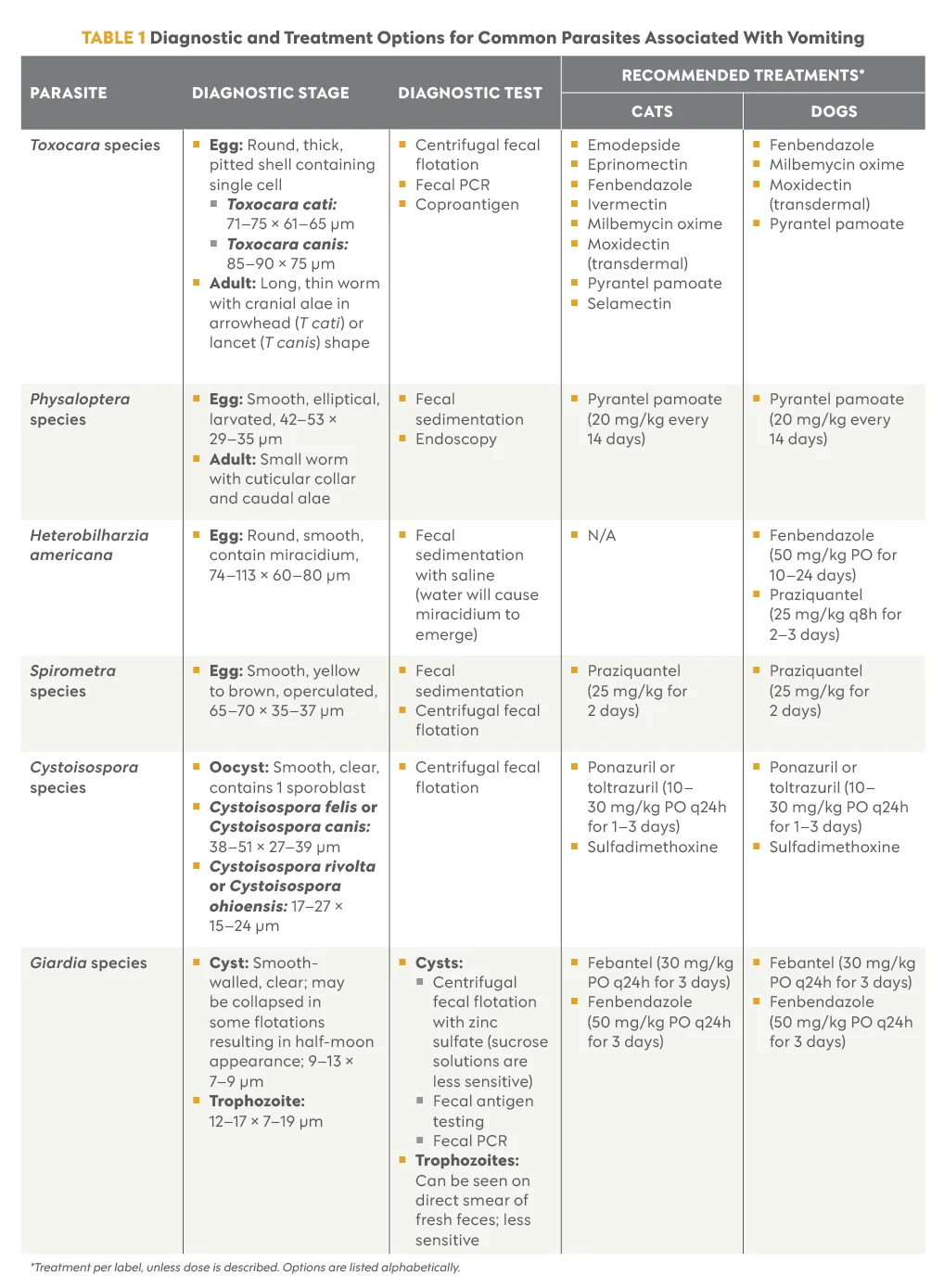
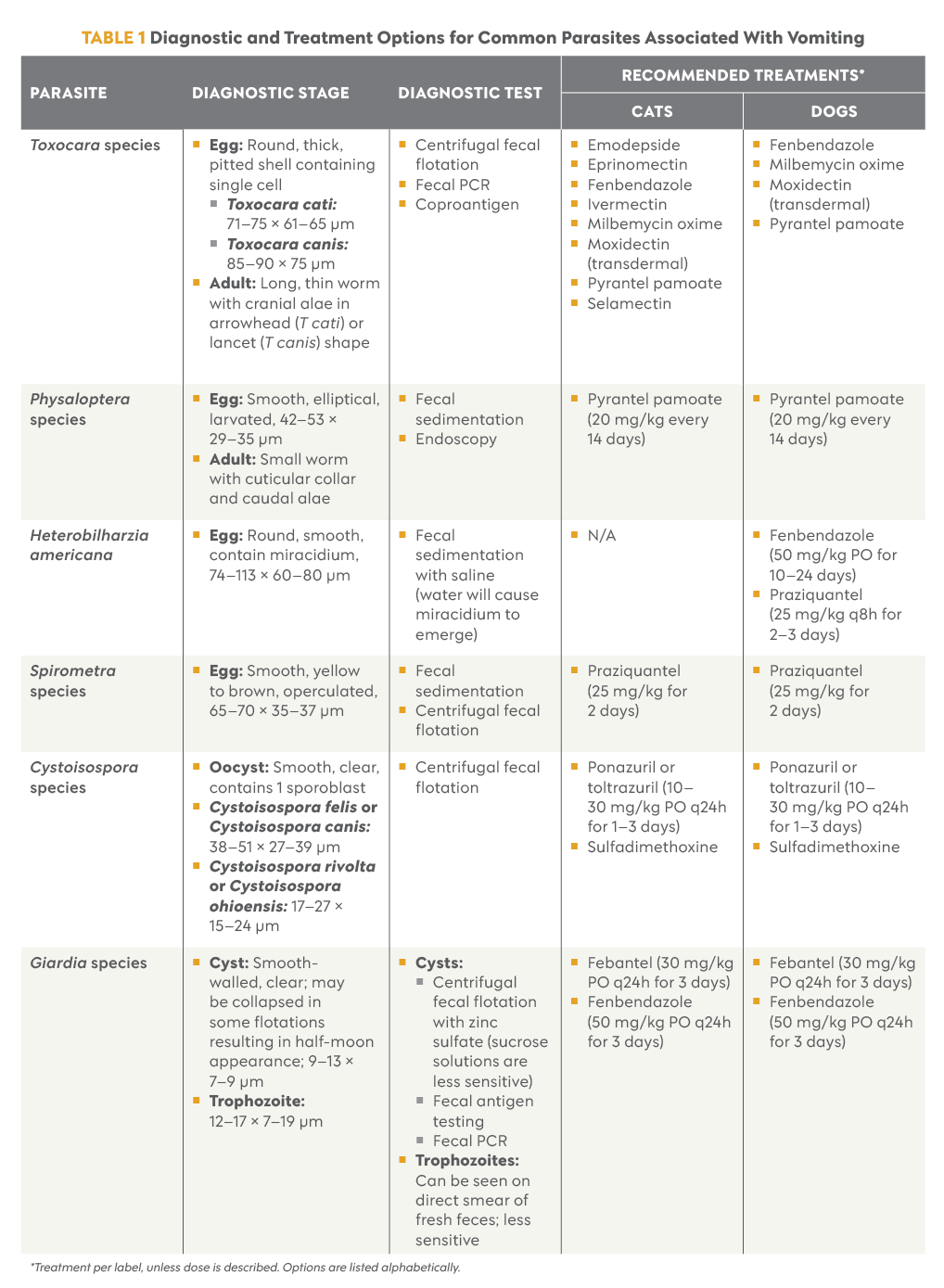
The practical point is simple: no one fecal test finds every parasite. Choosing the wrong method can leave an infection undetected and send the workup toward more costly or invasive procedures, including endoscopy or exploratory surgery. The diagnostic and treatment options for common parasitic causes are summarized in Table 1.
Parasites where vomiting may stand out
Physaloptera species
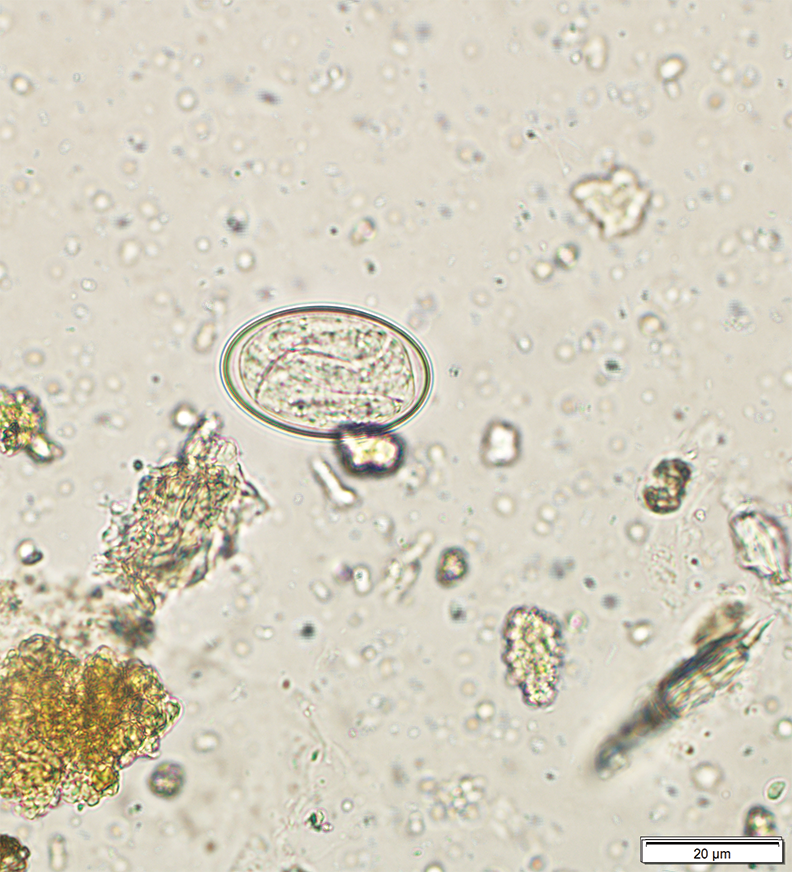
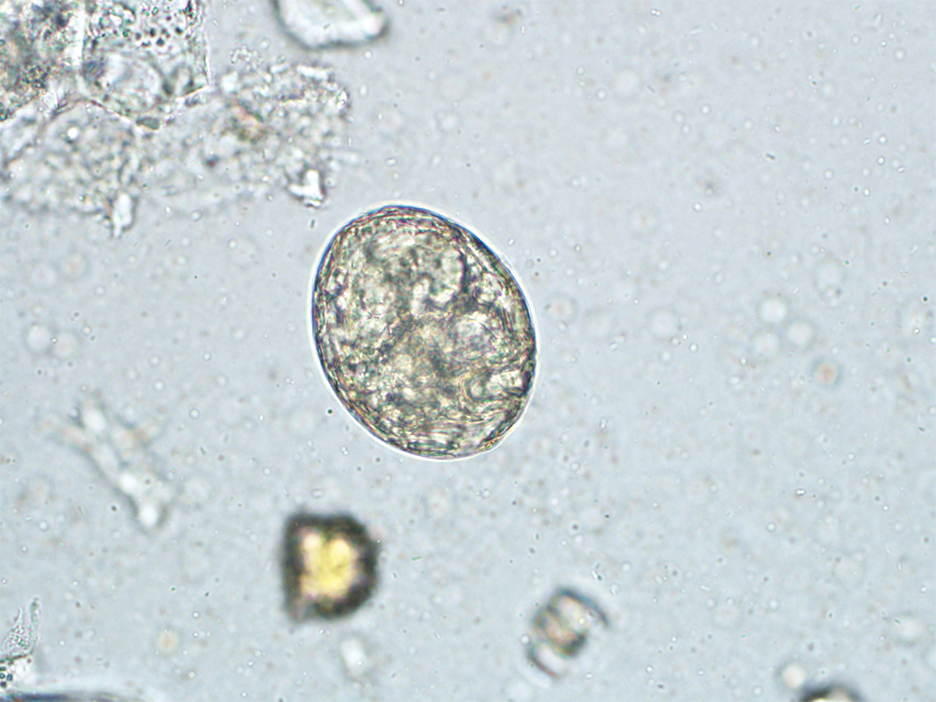
Physaloptera rara and Physaloptera praeputialis are stomach-dwelling nematodes. Dogs and cats can become definitive hosts after eating infected arthropods, usually crickets or beetles, or a paratenic host.1,2 Vomiting is the signature sign. It can persist for a long time, occur with a low worm burden, and appear on its own; affected pets may remain alert and interested in food but be unable to keep it down.3,4 That pattern deserves attention because the usual fecal flotation may not detect the parasite. Its small, larvated eggs are typically found by fecal sedimentation instead.5 Adult worms may also appear in vomit; a cuticular collar and caudal alae help identify them.6Figure 1. Physaloptera egg recovered via fecal sedimentation.
Toxocara canis and Toxocara cati
These common roundworms live in the small intestine. Puppies and kittens are frequent hosts, and nearly every litter encounters them early in life. Infection can follow ingestion of environmental eggs or a paratenic host; Toxocara can also pass across the placenta.7 Signs can include coughing before the worms reach maturity, vomiting—more often reported in cats than dogs—and abdominal discomfort or a potbelly. Severe disease is more likely in young animals, and untreated heavy infections can form large masses of worms. Sugar-solution centrifugal fecal flotation is the usual in-clinic test; reference laboratories can also test samples by fecal PCR or coproantigen methods.8,9 Puppies and kittens should be tested repeatedly during their first year.Exposure history matters
Heterobilharzia americana
This trematode causes canine schistosomiasis. Eggs passed in the feces of an infected dog or other mammal release larvae called miracidia, which infect freshwater snails. The snails release the next infectious stage, cercariae, into the water. Dogs acquire infection when cercariae penetrate their skin while they swim.10 Chronic enteropathy is a common reason for veterinary presentation, but signs vary. Vomiting may occur alongside diarrhea, weight loss, increased urination or thirst, fever, and dermatitis.10-12 Diagnosis may combine fecal sedimentation with a complete blood count, serum chemistry, urinalysis, and imaging. Findings can include anemia, eosinophilia, high or low calcium, high globulins, low albumin, and isosthenuria. For fecal sedimentation, saline is required: water causes the eggs to hatch immediately.12,13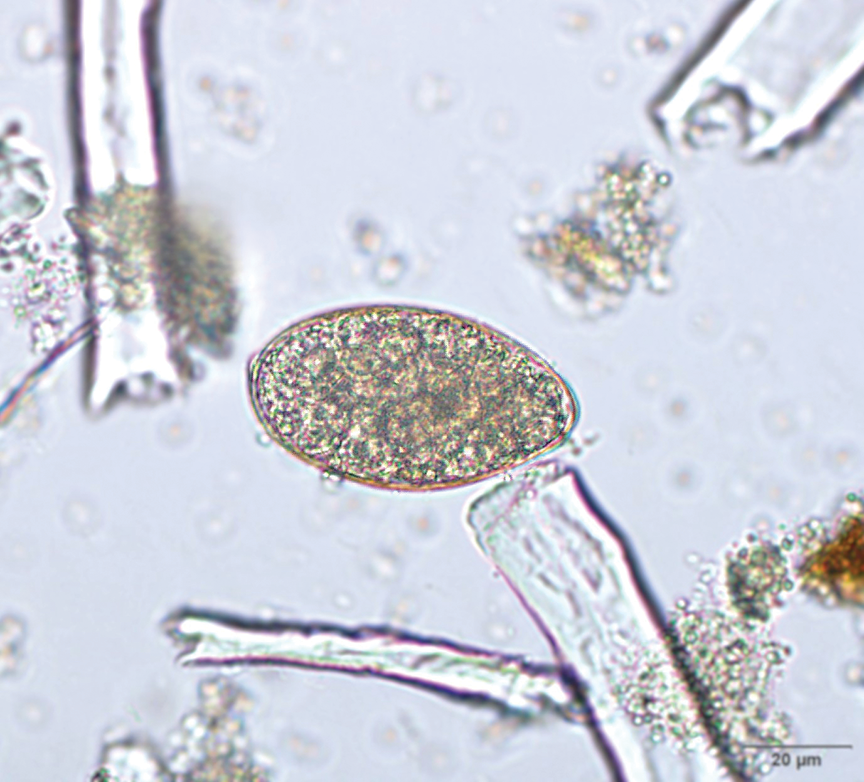
Figure 2. Heterobilharzia americana egg recovered from fecal sedimentation with saline.
Spirometra species
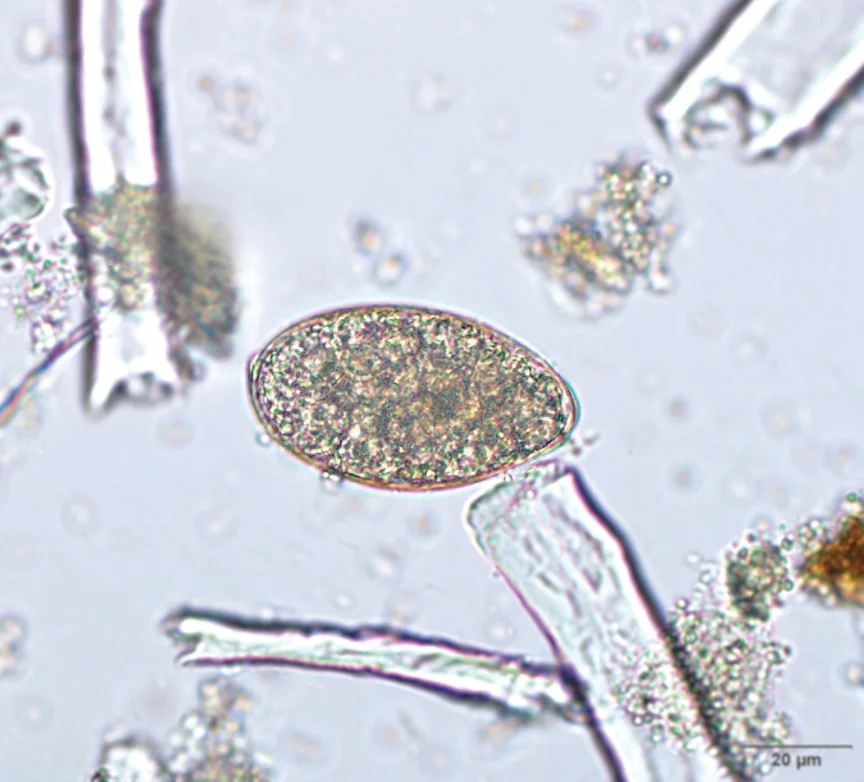
Adult tapeworms live in the small intestine of dogs and cats. Their eggs enter water and release coracidia, which infect freshwater copepods. In the copepods, the larvae develop into procercoids; a second intermediate host—such as a frog, snake, or other small vertebrate, but not a fish—then carries the plerocercoid stage. Dogs and cats become infected by eating those small vertebrates.14 Most intestinal infections cause no signs. Some animals, especially cats, develop diarrhea, vomiting, lethargy, loss of appetite, or abdominal pain and distention. Proglottids may appear in the vomit of some cats.15-17 Recommended tests are fecal centrifugation with zinc sulfate or fecal sedimentation; copro-PCR can help identify the species.14,17Figure 3. Spirometra egg recovered from fecal sedimentation.
Protozoa to keep on the list
Cystoisospora species
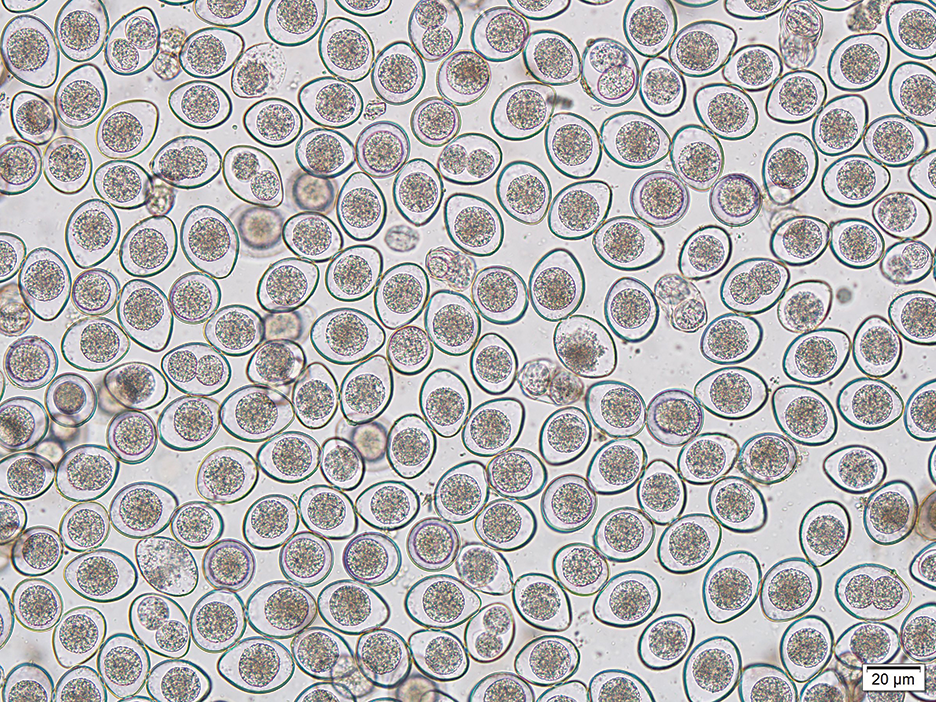
Animals acquire these protozoa by ingesting sporulated oocysts from the environment, infected paratenic hosts, or insects.18,19 Coccidiosis is common in puppies and kittens. Diarrhea is the usual sign, though some affected animals also vomit, become lethargic, or show abdominal pain.18,20,21 Diagnosis rests on finding oocysts in a fecal centrifugal flotation sample and matching that result to the clinical signs.Figure 4. Numerous Cystoisospora oocysts recovered from fecal flotation.
Discussion
Sign in to join the discussion.