Compare each recipe’s life-stage label, calories, ingredients, and storage needs to find a practical fit for your Shih Tzu.
Choosing food for a Shih Tzu comes down to three practical questions: does the recipe meet the dog’s life-stage needs, can you measure the right amount, and can your dog eat it comfortably? That sounds simple, but the label details matter. A familiar ingredient or soft texture doesn’t tell you whether a food supports puppy growth, and a small dog’s treats can take up a meaningful share of its daily calories.
By JustFoodForDogs. This guide draws on published product labels and veterinary nutrition guidance; no hands-on feeding test was performed. We may earn a commission from links in this article.
Start with the dog, then compare recipes
JustFoodForDogs has recipes that may fit different Shih Tzus, but the brand name alone can’t settle the choice. Check the exact recipe’s life-stage statement first, then weigh its calorie density, ingredients, storage requirements, and your dog’s individual needs. Our Shih Tzu breed profile offers background on the breed, but it can’t prescribe one ideal protein or portion for every dog. Two adult Shih Tzus may need different amounts because their size, body condition, activity, and health differ.
Before choosing a recipe, ask whether its label covers your dog’s life stage, whether its ingredients fit known restrictions, how many calories it supplies, and whether you can portion and store it consistently. Also pay attention to how your dog eats. A preference for a certain texture is one thing; a new reluctance to chew or eat may point to a health concern.
Cost works the same way: compare the price of the amount your dog will actually eat each day. A low package price may not mean a lower daily cost, and food left over past its storage window can add waste. “Natural” and “grain-free” don’t establish nutritional adequacy. Grain-free food should have a reason in the individual feeding plan, and an appealing ingredient list doesn’t prove a recipe is suitable for growth.
Chicken & Rice
Check the current Chicken & Rice recipe, portions, and ordering options.
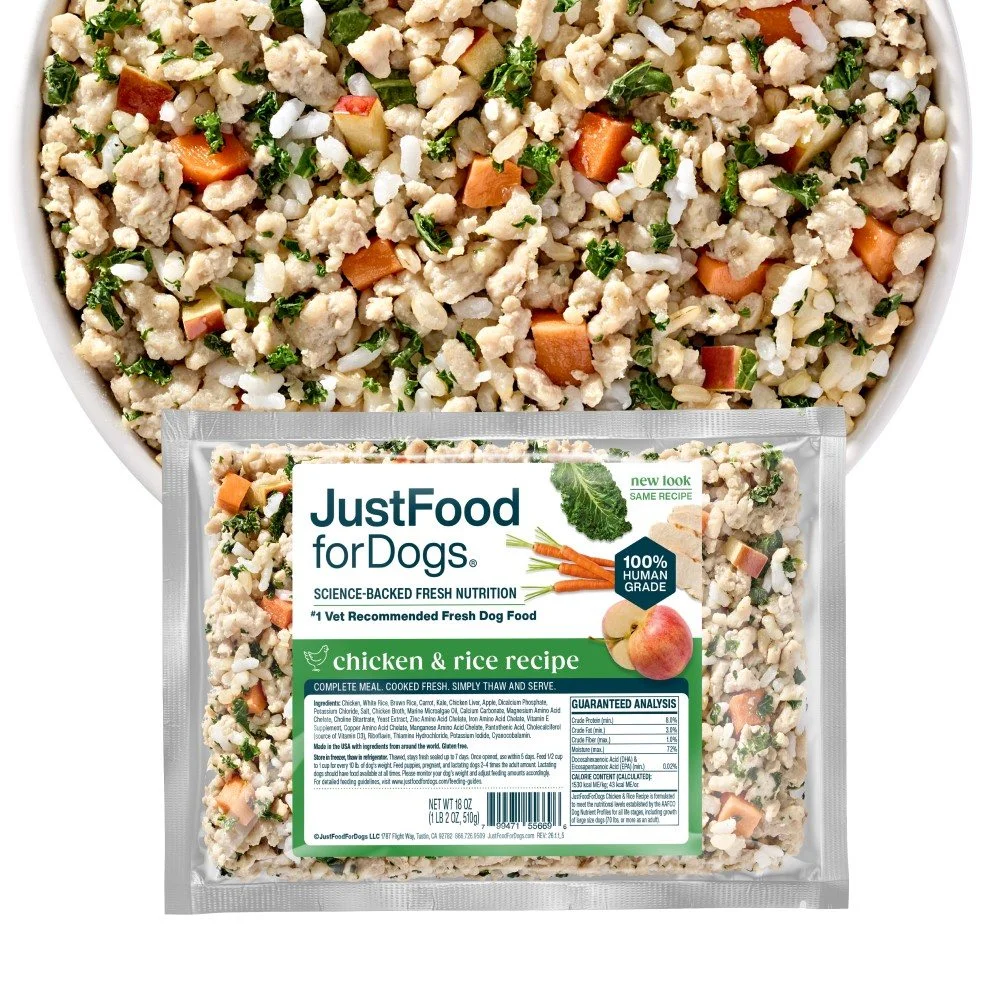
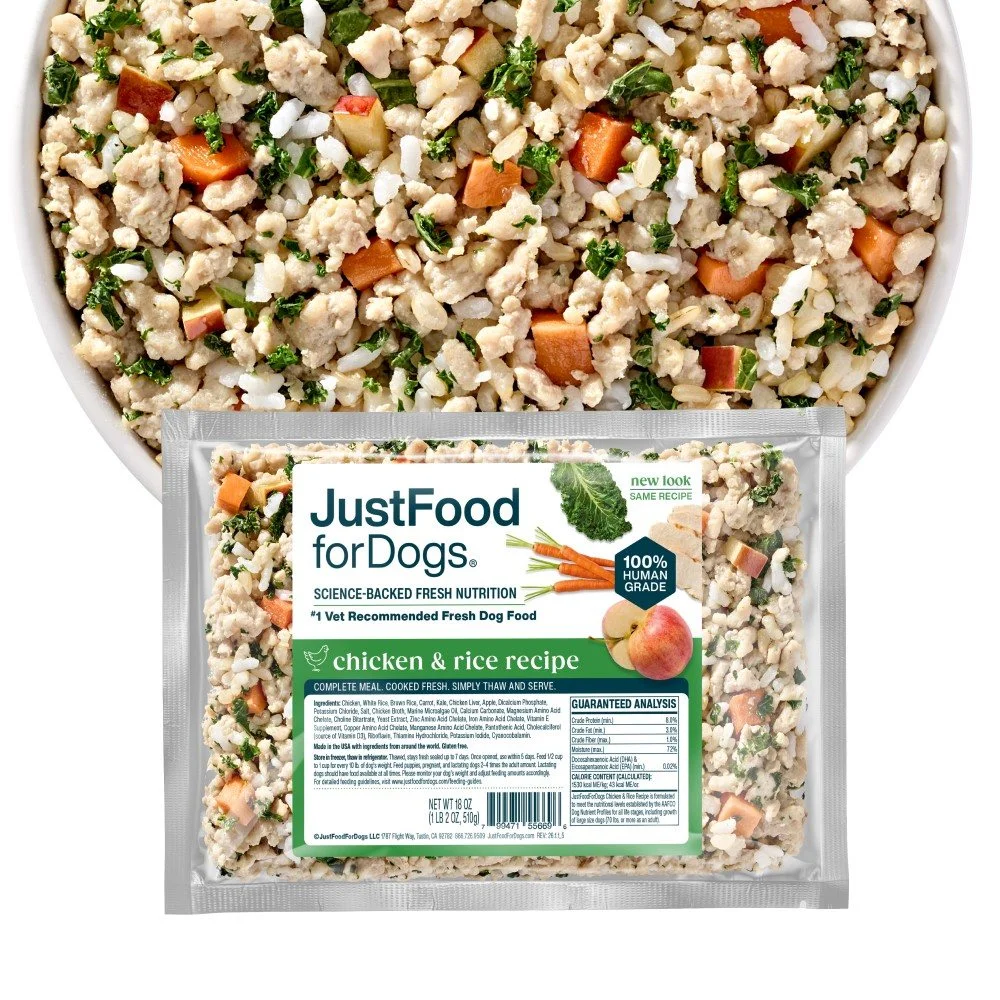
The label is the deciding detail. JustFoodForDogs recipes don’t all serve the same life stages, so check the package for the exact food you plan to buy. Our JustFoodForDogs review looks at the wider range; the current label determines whether a specific recipe fits here. Chicken & Rice is one option to assess for puppies and adults because its current statement includes growth and adult feeding. That makes it a useful starting point, not an automatic recommendation for every dog.
Match the recipe to the life stage
For a puppy, look for an explicit growth statement on the exact recipe. Moisture, a named protein, or placement beside another puppy food says nothing about whether that food supports growth. The current JustFoodForDogs labels distinguish these four recipes:
Puppies need a growth-qualified recipe; adult maintenance foods serve a different purpose.
| Recipe | Current life-stage statement | Recipe kcal/kg | Practical consideration |
|---|---|---|---|
| Chicken & Rice | All life stages, including growth of large-size dogs expected to reach 70 pounds or more as adults | 1,530 | Growth-qualified option to consider for puppies or adults |
| Fish & Sweet Potato | All life stages, including large-size growth | 922 | Growth-qualified; a greater food weight is needed to supply the same calories as the other recipes shown |
| Beef & Russet Potato | Adult maintenance; not for growing puppies | 1,559 | Consider for an adult after checking the individual feeding plan |
| Turkey & Whole Wheat Macaroni | Adult maintenance | 1,741 | More calories per gram than the other recipes shown, so measure accordingly |
The large-size growth language on an all-life-stages label doesn’t reserve that food for large breeds. A Shih Tzu puppy can still fall within the statement. For an adult, all four recipes may be considered, but adult maintenance doesn’t mean a recipe suits every disease or dietary restriction.
Fish & Sweet Potato
Check the current Fish & Sweet Potato recipe, portions, and ordering options.
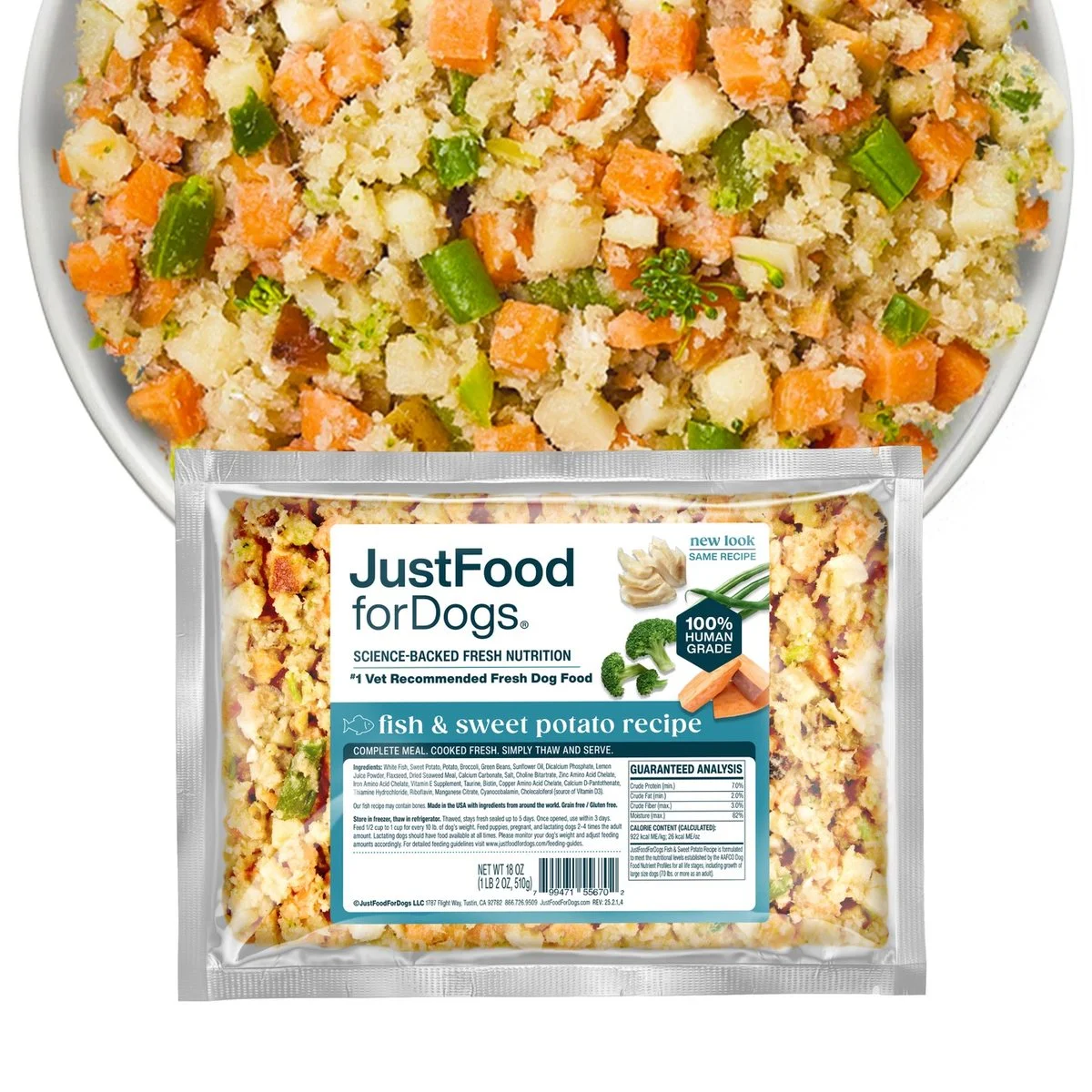
For a puppy with ordinary feeding needs, Chicken & Rice or Fish & Sweet Potato are growth-qualified starting points; confirm the portion and individual fit. Adults can compare eligible recipes by ingredients, calories, storage, and budget. If a puppy has digestive symptoms, keep growth adequacy in the decision instead of switching to an adult-only food because its name suggests “sensitive” digestion. And if your dog has a prescribed feeding plan, follow it over a general breed guide.
A soft meal may be appealing or easier to portion, but texture doesn’t supply the nutrients a puppy needs to develop. Fish & Sweet Potato is another growth-qualified option. Its whitefish blend includes cod, pollock, and haddock, rather than cod alone. At 922 kcal/kg, it also takes more food by weight to reach the same calories as Chicken & Rice. Before ordering in quantity, note the recipe name and calorie statement from the current package so an older feeding note doesn’t get applied to a different formulation or similarly named product.
Measure meals around the daily calorie target
Small daily portions leave less room for unnoticed extras. Training treats, dental chews, table food, and food used to give medication all count. Set aside calories for those items before measuring the main food.
The AAHA nutrition guidelines recommend that complete and balanced food supply at least 90 percent of a dog’s daily calories. Treats and other extras generally account for no more than the remaining 10 percent. That’s a maximum, not a quota.
Here’s a calculation example, not a breed-wide recommendation: if an adult dog’s agreed daily target is 350 calories, including 35 calories of treats, the allowance for complete food is 315 calories.
Calculate the food weight, divide meals, and check storage
| Step | Input or action | Small-dog consequence |
|---|---|---|
| Set the daily total | Example target: 350 calories, including 35 calories of extras | Count rewards and other food in the total |
| Calculate complete food | 350 minus 35 leaves 315 calories | Use this amount for the recipe calculation |
| Convert calories to grams | Daily food calories ÷ recipe kcal/kg × 1,000 | About 206 g of Chicken & Rice or 342 g of Fish & Sweet Potato daily |
| Split into meals | For an agreed two-meal adult schedule, divide the daily grams by two | About 103 g of Chicken or 171 g of Fish per meal |
| Follow storage directions | Use the package’s handling instructions | Fish: three days after opening; five days sealed after thawing. Follow any shorter package direction. |
Daily grams = remaining complete-food calories ÷ recipe kcal/kg × 1,000.
Using the same 315-calorie allowance, the daily amounts are approximately:
- Chicken & Rice: 206 grams, or 103 grams per meal if divided in two.
- Fish & Sweet Potato: 342 grams, or 171 grams per meal if divided in two.
- Beef & Russet Potato: 202 grams, or 101 grams per meal if divided in two.
- Turkey & Whole Wheat Macaroni: 181 grams, or about 90.5 grams per meal if divided in two.
Those amounts are alternatives, not meals to combine. Fish weighs more because it has fewer calories per gram; Turkey weighs less because it has more. A bowl that looks fuller may contain the same calories as a smaller serving, so recalculate whenever you change recipes.
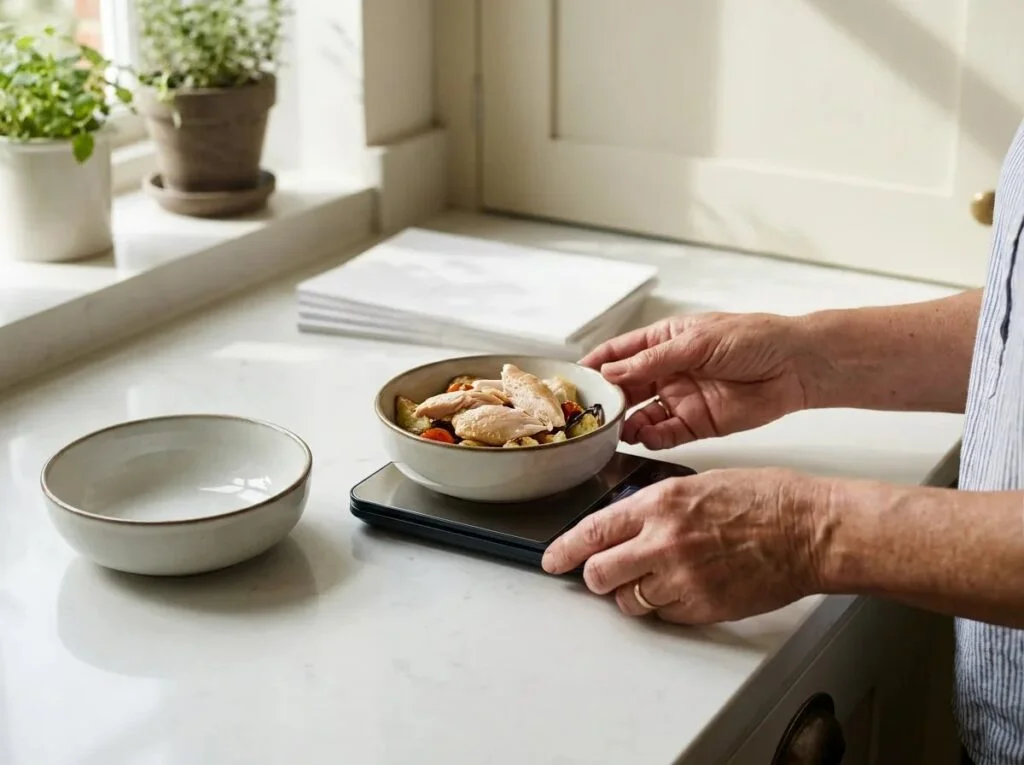
A kitchen scale turns the calculation into a repeatable routine: set the bowl on the scale, zero it, and add the planned amount. If several people feed the dog, write down the day’s total and each meal’s share. That simple step can prevent an accidental extra serving.
The calorie target needs to keep pace with the dog. Monitor weight and body condition, then discuss adjustments with your veterinary team. A puppy’s needs change as it grows; an adult’s may shift with activity, neuter status, or health.
Puppies, small dogs, and weight management
A two- or three-month-old Shih Tzu needs an age-appropriate puppy plan, not the adult example above. Small size doesn’t mean a puppy needs less attention to nutrition, and an adult weight-control portion isn’t a shortcut for feeding a growing dog.
An “imperial” label doesn’t prescribe calories, either. Use the individual dog’s age, size, growth status, and body condition. For a senior Shih Tzu, age alone also doesn’t determine the right amount or establish a need for a special recipe.
For an overweight adult, adjust calories while preserving nutritional adequacy. Ask your veterinary team to set a target and review schedule, including a plan for treats and rewards, rather than cutting portions by guesswork or substituting low-calorie scraps.
How often should a Shih Tzu eat?
Meal frequency depends on age and individual needs. Puppies generally need more frequent meals than adults; many healthy adults can follow a regular two-meal routine. A puppy or a dog with a medical concern may need a different schedule.
The daily allowance still governs the total. Three meals don’t mean three full daily portions, and a bedtime snack adds calories unless you subtract them elsewhere. For a puppy, an older dog with changing health, or a dog that takes medication with food, agree with your veterinary team on both meal times and amounts.
Can Shih Tzus eat scrambled eggs?
A little plain, thoroughly cooked egg can be an occasional extra if the dog’s feeding plan allows it. Count its calories, and avoid onion, garlic, and seasoned leftovers. Butter, oil, cheese, and other additions change both the ingredients and the calorie total. Egg isn’t needed to balance a complete JustFoodForDogs recipe. If your dog is on an elimination or prescribed diet, check before adding it.
Beef & Russet Potato
Check the current Beef & Russet Potato recipe, portions, and ordering options.
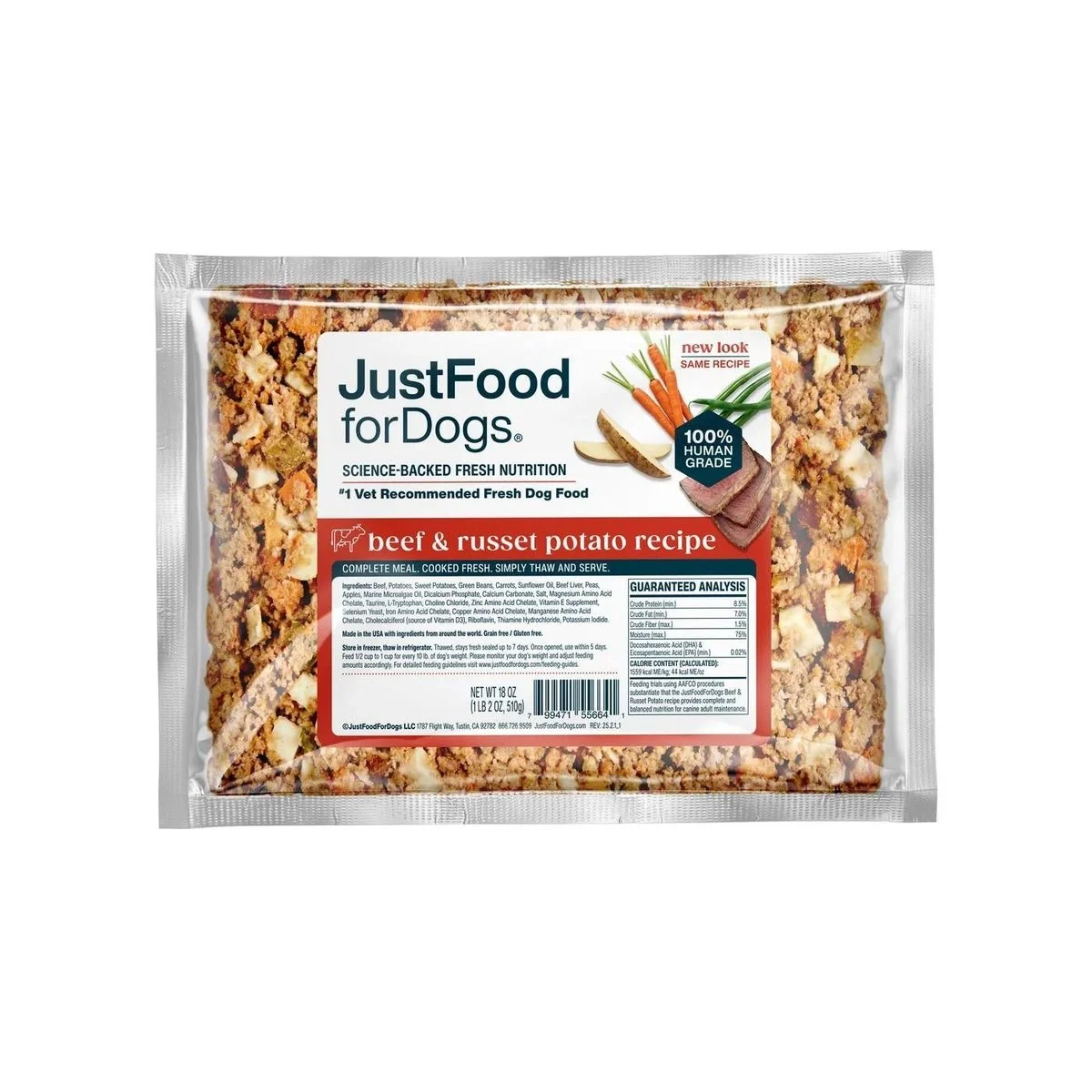
For an eligible adult, Beef & Russet Potato is another complete food that fits the same calorie calculation. Its adult-maintenance label still rules it out for growing puppies, regardless of how small the portion is.
Texture preferences and changes in chewing

A Shih Tzu may simply prefer soft food. The distinction that matters is whether the dog has always eaten this way or something has changed. New reluctance to chew or eat calls for attention, not an immediate label of “picky.”
Watch what happens at the bowl. Does your dog approach eagerly, pick up food and drop it, eat only when hand-fed, or walk away before trying? Those details can help you describe the problem to your veterinary team, but they don’t identify its cause.
When Picky Eating May Signal Pain
Texture preference and trouble eating can look similar at the bowl, but they call for different responses. The American Veterinary Medical Association lists abnormal chewing, drooling, dropping food, and reduced appetite among signs that can accompany dental problems. A dog who manages soft food may still have an uncomfortable mouth; changing the meal’s texture won’t treat the cause.
- Preference: The dog eats enough comfortably but favors one suitable texture or recipe.
- Ability and comfort: The dog seems interested but struggles to take, chew, or swallow food, or its appetite has changed.
A veterinarian may recommend softer meals, but don’t use them to mask persistent difficulty. Eating a favorite treat doesn’t rule out a problem, and trying to pry open a painful mouth can make things worse.
If your dog is otherwise well and its eating habits are stable, make meals easier to observe: offer measured portions in a quiet spot, use a steady bowl, and keep track of extras. A slippery or crowded feeding area can make it harder to tell whether the issue is the food, access, or your dog’s comfort.
Keep a record of the recipe and amount offered, how much was eaten, treats and other food, whether your dog approached willingly, any unusual chewing or drooling, and whether the pattern happens at every meal or only in a particular setting. Changing the recipe, adding several toppers, and shifting meal times all at once makes ordinary preferences harder to read. Once health concerns are addressed, a consistent routine gives you a clearer picture.
For adults who qualify, Turkey & Whole Wheat Macaroni is another JFFD prepared meal. It has a higher calorie density, so a smaller measured weight can provide the same calories. That affects portion size; it doesn’t show that the recipe will fix picky eating or chewing discomfort.
How many days can a Shih Tzu go without eating?
Don’t wait for a survival deadline. A new loss of appetite calls for veterinary advice, especially in a puppy or a dog with other signs of illness. The useful question is why your dog has stopped eating and how soon it needs an assessment.
Tell your veterinary team when the change began, what your dog has eaten, whether it’s drinking, and whether you’ve seen vomiting, weakness, or apparent pain. AAHA’s guidance on pain signs explains that discomfort can affect chewing, swallowing, and appetite.
JustFoodForDogs Turkey & Whole Wheat Macaroni
Review the current Turkey & Whole Wheat Macaroni recipe, portions, and ordering options.
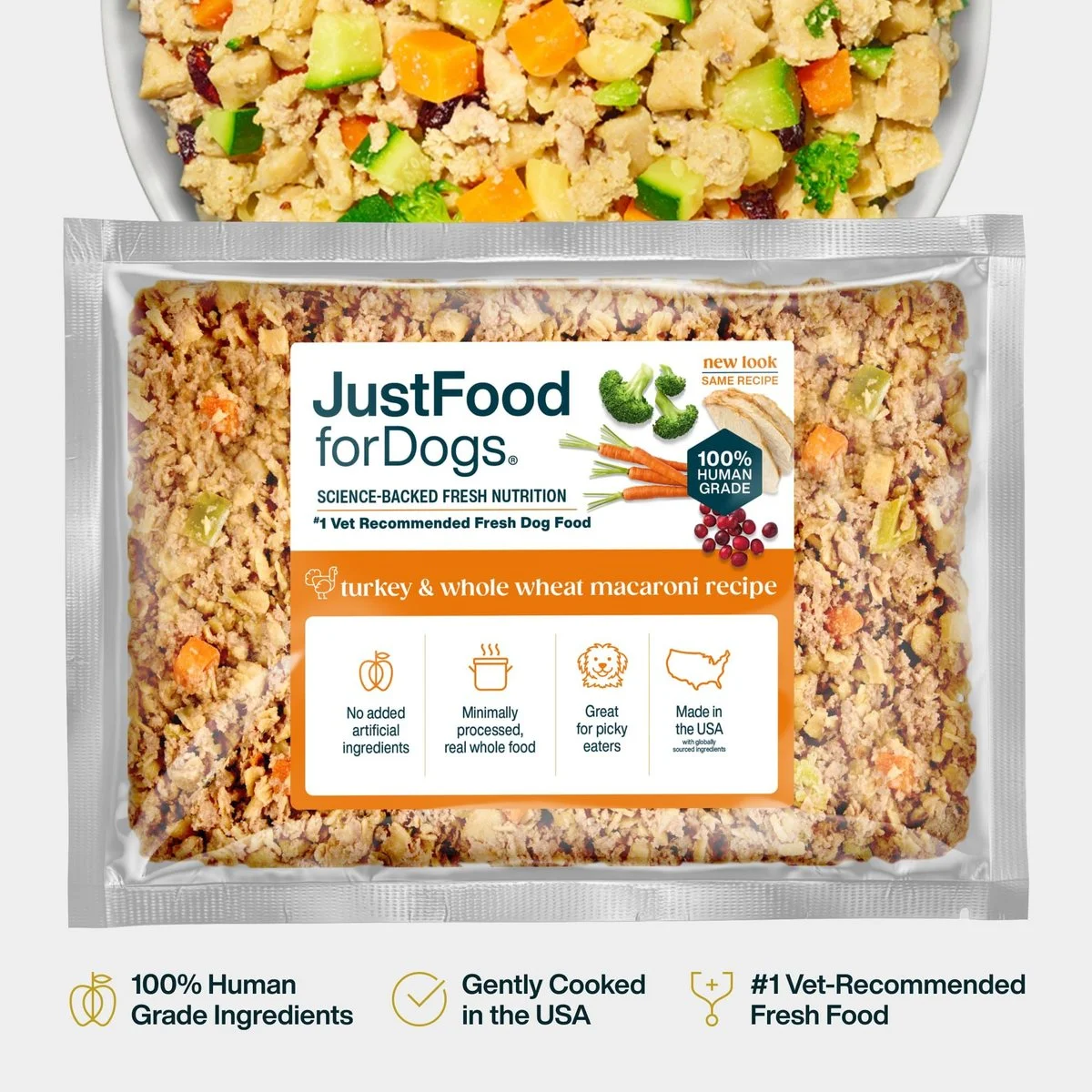
A puppy, a dog that seems unwell, or a dog struggling to eat needs prompt veterinary advice. Repeated flavor experiments won’t answer the more important question: is this preference, or is eating difficult?
Sensitive Skin and Digestive Concerns

An itchy Shih Tzu or one with digestive symptoms needs an individual assessment. The breed alone doesn’t establish a food allergy, and a product labeled “sensitive” doesn’t identify what’s causing the symptoms.
Before choosing another food, assemble the full feeding history: current and past complete foods; treats, chews, toppers, supplements, and table food; flavored products given with medication; when skin or digestive changes began and how they vary; recent food changes and their pace; and any change in appetite, weight, or stool. That history is more useful than picking a protein based on breed. A new recipe may differ from the current one without being suitable for a structured allergy investigation.
The Merck Veterinary Manual describes complete elimination diets as a tool for investigating food allergy. That approach requires a defined food and controlled extras. Cycling through ordinary recipes or introducing new treats can make the results difficult to interpret.
Match the recipe to the dog
JFFD recipes have specific uses, so check the exact product and life stage. Its current Sensitive Skin recipe is for adult maintenance. A name that sounds relevant doesn’t make it suitable for a Shih Tzu puppy with skin or stomach concerns.
Fish & Sweet Potato is a complete recipe qualified for growth, but that doesn’t make it an allergy diet for every dog. Its fish blend contains several whitefish species, and the entire ingredient list needs to fit any restrictions prescribed for your dog.
Don’t blame chicken, beef, grains, or another ingredient simply because it appears in your dog’s current food. A food change can be part of managing a problem, but this guide can’t establish the cause of an individual dog’s symptoms or claim that a particular recipe will cure them.
Tear stains and digestive changes
Tear stains don’t prove that food is causing an allergy, and no particular food can be promised to remove the discoloration. Ask your veterinary team about persistent or changing eye-area concerns, especially if your dog seems uncomfortable or the eye itself changes. A breed-based food ranking can’t diagnose the cause.
“Sensitive stomach” can describe very different situations. Occasional reluctance to eat, repeated vomiting, and ongoing loose stool aren’t interchangeable signs. The label on a food can’t tell you whether a puppy or adult needs medical attention.
Guaranteed minimum fat is a floor, not a typical value or a maximum. If a specific nutrient limit matters, get current data for the exact recipe. Choosing a medical feeding plan based on the lowest-looking minimum in a general product list is a poor shortcut.
Kidney disease changes the feeding plan
Breed, texture, and protein name aren’t enough to choose food for a Shih Tzu with kidney disease. The diagnosis changes the discussion; the treating veterinarian needs to set the diet and monitoring plan.
Our guide to kidney disease in pets covers the condition in more detail. Bring the exact recipe label, current portion, appetite history, and a list of other foods to your veterinary appointment. An ordinary fresh food isn’t automatically equivalent to a prescribed renal diet, and a dog’s preference for its texture isn’t a reason to substitute without veterinary direction.
Switching Food and Storing Small Portions

Plan the change before opening multiple packages. If your dog is well and you’re switching food routinely, gradually replace the old food with the new one and watch how your dog tolerates it. Ongoing symptoms or a prescribed diet call for an individual transition plan.
Replace calories as you switch; don’t add a full new portion on top of the existing meal. A less calorie-dense recipe may require more grams to provide the same calories.
Using the earlier 315-calorie complete-food allowance, a transition stage with three-quarters of its calories from Chicken & Rice and one-quarter from Fish & Sweet Potato works out to about:
- 154 grams of Chicken & Rice.
- 85 grams of Fish & Sweet Potato.
Those portions total roughly 315 calories. They illustrate the calculation; they don’t prescribe a transition schedule. Set the pace for your dog and follow any veterinary instructions.
Write down the recipes, amounts, and meal times in one place. If someone else feeds breakfast, they should be able to follow the plan without guessing from the dinner bowl.
For Fresh Frozen meals, use the current package directions for thawing and storage. JFFD’s current FAQ gives different refrigerator windows for fish and other proteins:
- Fish & Sweet Potato: Up to five refrigerated days while sealed after thawing, and up to three days after opening.
- Other Fresh Frozen proteins: Generally up to seven refrigerated days sealed after thawing, and five days after opening.
- Shorter package directions: Follow the shorter limit on your package.
Opening a package doesn’t reset its storage clock. Track the thawing and opening dates, and follow whichever limit arrives first. The sealed-thawed window doesn’t give opened food extra time.
Small meals make package timing easy to miss. At an illustrative 100 calories a day, an 18-ounce Chicken & Rice package provides about 7.8 days of food, beyond the general five-day window after opening. The same size Fish package provides about 4.7 days at that calorie allowance, exceeding its three-day opened limit.
Those numbers are a reason to consider package size and handling before you buy, not to feed extra calories. If your planned use doesn’t fit the package directions, ask the manufacturer about approved portioning and freezing. Moving leftovers to a different container doesn’t restart the clock.
A practical small-meal routine is to check the next package’s instructions, record thawing and opening dates, keep the daily calorie and gram allowance visible, measure each meal, return stored food to refrigeration promptly, record leftovers, and reorder based on actual use and safe storage.
Before making a homemade diet
Homemade food can sound appealing if your Shih Tzu prefers soft meals or needs small portions. But meat, rice, and vegetables don’t automatically add up to a complete diet. Similar ingredients don’t guarantee the right nutrient balance.
Our guide to homemade pet diets explains the planning involved. Use a properly formulated recipe for your individual dog rather than copying the ingredient list from a commercial product. Growth, medical restrictions, supplements, and substitutions all need careful attention.
For a purchased JFFD meal, follow its label and feeding directions. A reliable routine brings together the right life-stage recipe, an appropriate calorie allowance, comfortable eating, and storage that fits how much your dog actually consumes.
Related reading: Petful covers the best dog food for Bernedoodles, including tiny and mini sizes, and WebVet explains fresh dog food cost for a small dog.
Frequently Asked Questions
Shih Tzus don’t share one favorite food. Individual preferences vary, and liking a food doesn’t establish that it’s suitable. Choose a complete food for the right life stage and check whether your dog comfortably eats the planned amount. A sudden change in appetite or preference merits attention before an automatic flavor switch.
Switch when your dog has finished growing, based on an individual maturity assessment rather than a date assumed to fit every puppy. In the JFFD recipes compared here, Beef and Turkey are for adult maintenance; Chicken and Fish include growth. Check the recipe and recalculate the portion when the life stage changes.
Breakfast can simply be one measured portion of the day’s complete food. Count treats and extras across the rest of the day. A balanced complete food doesn’t need egg, meat scraps, or another addition to make it a proper breakfast.
There’s no single healthiest recipe for every Shih Tzu. Start with food that meets the dog’s life-stage needs, then consider health, body condition, ingredient restrictions, calories, and practical feeding. “Fresh,” “natural,” and a favored protein don’t settle the choice on their own.
Recalculate the weight when calorie density changes. Fish & Sweet Potato provides 922 kcal/kg; Turkey & Whole Wheat Macaroni provides 1741 kcal/kg. The same weight delivers very different calories, so base the new portion on the intended calorie allowance.
Current instructions allow three refrigerated days after opening and five days sealed after thawing. Record the dates, keep the food refrigerated, and follow any shorter directions on the package. The longer general window for other JFFD proteins doesn’t apply to this fish recipe.
The post Best Dog Food for Shih Tzus: Puppy and Adult Feeding Guide appeared first on Vetstreet.
Discussion
Sign in to join the discussion.