Quiet observation, minimal restraint and early oxygen can help veterinary teams stabilize cardiac cats while reducing the risk of stress-related decline.
For a cat in respiratory distress, the first clinical decision may be how little to do. Routine restraint, a fast examination or moving a patient for imaging can raise stress at a moment when the heart and lungs have little room to compensate. For veterinary technicians, a calm environment and early stabilization can shape what happens next.
Feline cardiology patients may have diagnosed or unrecognized heart disease. In either case, stress can trigger a surge in catecholamines such as epinephrine and norepinephrine, increasing heart rate, blood pressure and the heart’s oxygen demand. In a cat with hypertrophic cardiomyopathy (HCM), the most common feline cardiac disease, reduced ventricular compliance can make it harder for the heart to meet that added demand.
That makes handling a clinical intervention, not just a practical step before treatment. The aim is to notice distress early, minimize stimulation and prioritize support for breathing before attempting diagnostics.
Start with the room and the carrier
Low-stress care begins before anyone touches the cat. Move a cardiac patient out of the waiting area promptly, reduce noise and traffic, and use dim lighting where possible. A quieter room can help limit the physiological response that may worsen a fragile patient’s condition.
Resist the urge to pull the cat out of its carrier as soon as it arrives. Many cats feel safer inside it, and an initial visual assessment may offer useful information without adding the stress of handling. Observe respiratory rate and effort, posture and responsiveness. If the patient is breathing comfortably enough for observation, a quiet assessment may provide a better starting point than an immediate hands-on exam.
Watch for early signs that the cat’s stress is rising: dilated pupils, tail movement, ears rotating, tense posture or an increasing respiratory rate. Open-mouth breathing, blue-tinged gums, vocalizing while breathing laboriously or collapse signal a more urgent change. If these appear, reassess the need for restraint and focus on stabilizing the patient.
Keep handling brief and supportive
When contact is necessary, use gentle support rather than forceful restraint. Supporting the chest and hindquarters while moving slowly can help keep the cat secure without escalating its response. Avoid scruffing when possible, and let the cat remain in a sternal position if that supports easier breathing. Forcing a patient onto its side may increase respiratory effort.
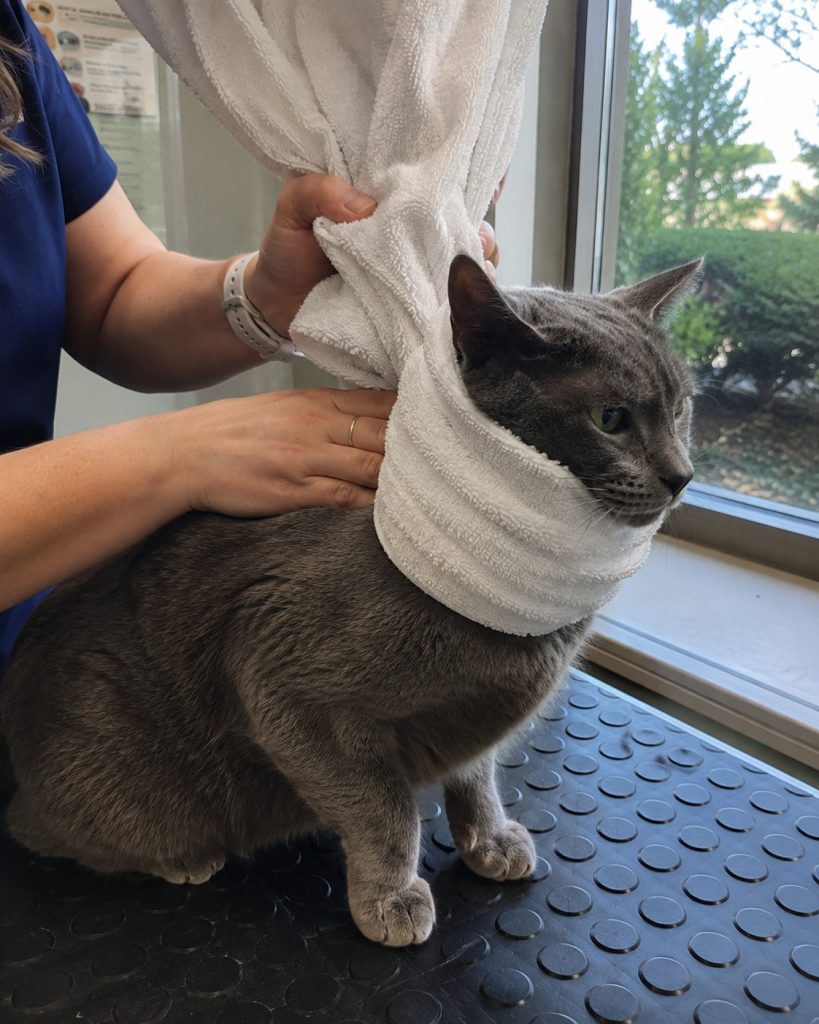
A towel can provide light containment and block some visual stimulation. Partial draping may be enough; the goal is to help the patient feel more secure without restricting movement or breathing. Limit repeated interactions by clustering procedures and skipping steps that won’t change immediate care.
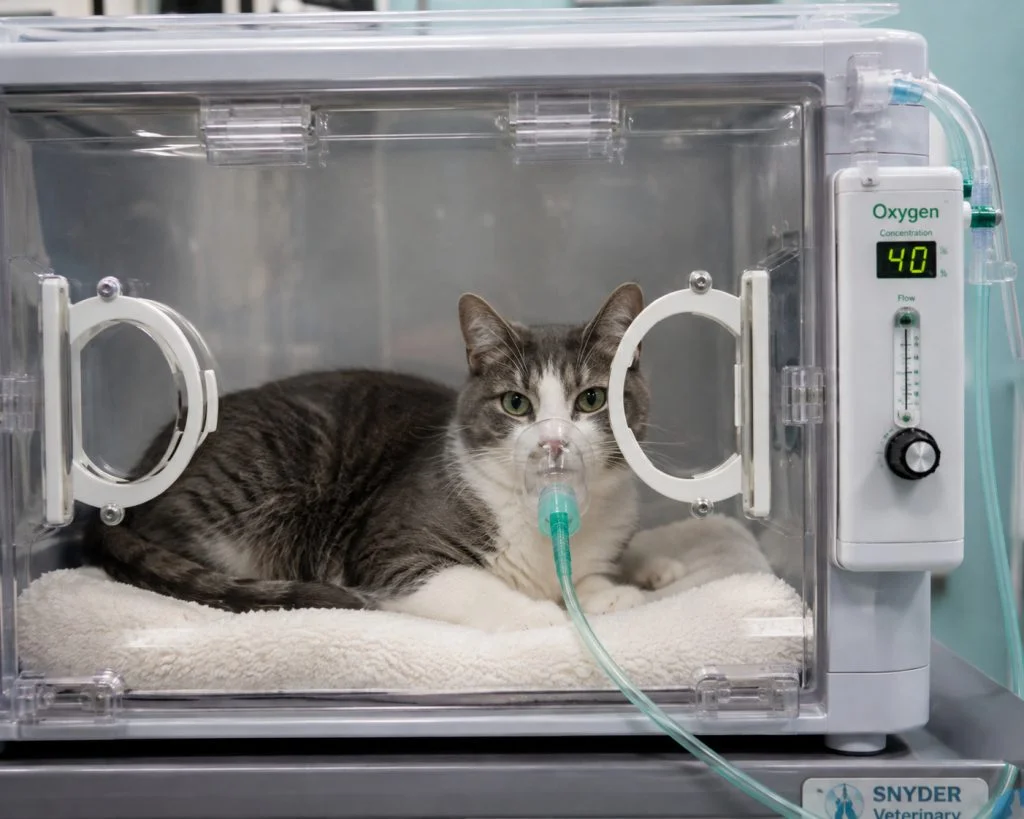
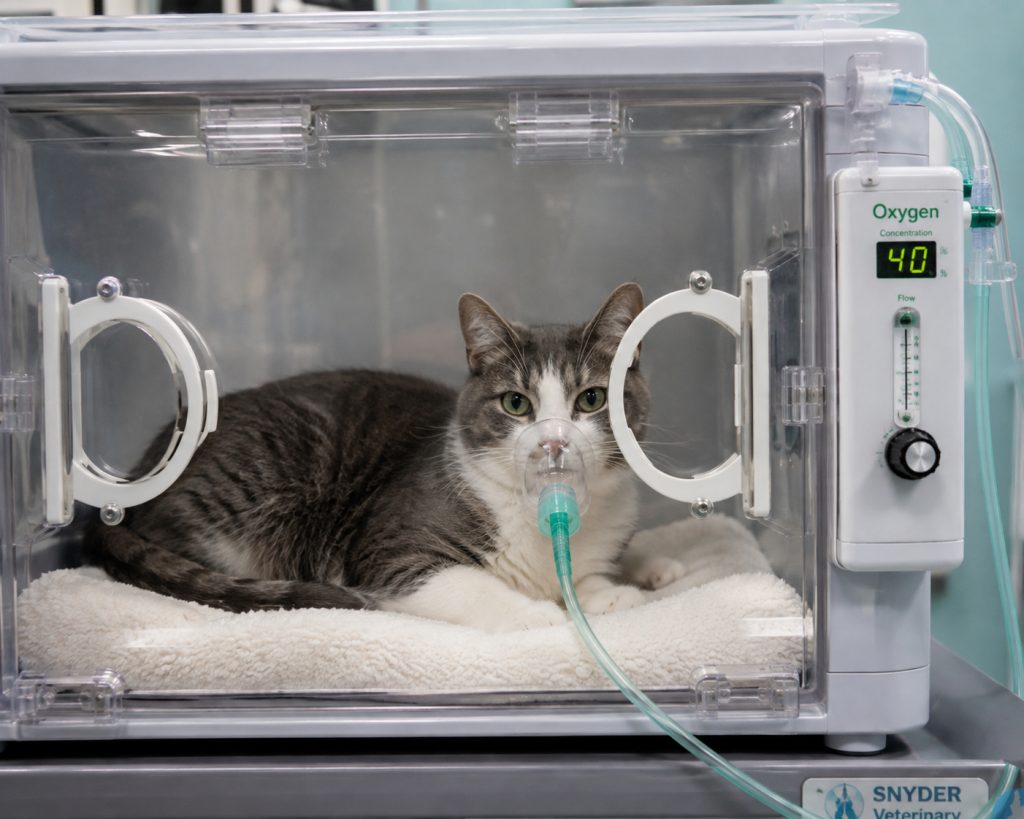
For cats showing respiratory compromise, oxygen takes priority over diagnostics. An oxygen cage can provide support while limiting handling. Flow-by oxygen may be used while staff prepare a more stable setup; nasal oxygen may suit selected patients if they tolerate it. Radiographs and blood draws can wait until the cat is stable enough to tolerate them.
Food or treats may help a stable patient remain calm, but they aren’t appropriate for a cat in respiratory distress. In an acute situation, a focused stabilization plan matters more than completing a thorough examination immediately.
Adapt diagnostics to the patient
Once the patient is stable, technicians can reduce the burden of testing through careful timing and preparation. Take blood pressure in a quiet space with minimal restraint; Doppler methods are often faster and more reliable in cats. When radiographs are indicated, consider pre-oxygenation and use positioning aids to shorten handling time.
Blood collection should be performed by experienced staff using the least stressful site available. Repeated attempts can mean repeated restraint, so limiting the number of attempts is part of the plan. If the cat is fractious or highly stressed, or a necessary diagnostic procedure cannot be delayed, sedation may be safer than allowing a prolonged struggle. Appropriate sedation can reduce catecholamine release and heart rate. The veterinarian directs that decision, while technicians can identify the need and raise it promptly.
Oliver’s case shows the value of restraint in the plan
A nine-year-old male domestic shorthair named Oliver arrived with acute tachypnea after his owner noticed an elevated respiratory rate over the preceding 24 hours. He had no known cardiac history. In his carrier, he was lying on his side, breathing with his mouth open at about 80 breaths per minute. He was minimally responsive and had dilated pupils.
The initial plan called for rapid removal, triage, radiographs and an IV catheter. A technician advocated for stabilization first. Oliver stayed in the bottom half of his carrier while the team began flow-by oxygen. Staff limited the assessment to observation and kept the room dim and quiet, with few people present.
After about 10 minutes, his breathing improved and his mouth closed. One technician then performed a brief examination while maintaining sternal positioning. Under the veterinarian’s direction, Oliver received sedation so the team could proceed safely with diagnostics. Radiographs showed pulmonary edema consistent with congestive heart failure secondary to suspected HCM.
He stabilized with oxygen and diuretics and went home 48 hours later with a long-term management plan. The sequence matters: the team reduced stimulation, supported his breathing and waited for improvement before moving on to tests. The case illustrates how technician advocacy can change the pace of care when the patient’s condition makes speed itself a risk.
Make low-stress care part of hospitalization
Calm, consistent handling remains important after the initial crisis. Set up the cage so food, water and litter are easy to reach, provide soft bedding, and avoid high-sided litter boxes that require extra effort. Cluster treatments where practical and limit unnecessary contact. A settled patient can often be assessed more reliably through observation than through repeated examinations.
Monitoring should emphasize resting respiratory rate, breathing effort, posture and appetite. These observations are most useful when the cat is calm, so the team’s approach to routine checks affects the quality of the information it gathers.
At home, owners can be taught to monitor resting respiratory rate, recognize early signs of distress and reduce stress in the household. Discuss medication routines in clear, practical terms that help owners administer treatment consistently while keeping interactions calm.
Consistency makes the approach work
Low-stress handling depends on a team sharing the same expectations. Staff need to communicate changes in patient status, agree on when handling is necessary and review difficult cases together. Technicians can help keep that approach consistent by advocating for early stabilization, fewer interactions and sedation when a struggling patient needs a procedure.
The practical takeaway is to make each contact count. For a cardiac cat, observation, oxygen and a quiet environment can be more useful at first than a rapid sequence of tests. Teams that stabilize before pursuing diagnostics give themselves a clearer view of the patient’s condition and a better chance to proceed safely.
Beth Armstrong, CVT, CVBL, CFE, CCFP, CFT, CTP, FT, works with clinical teams on their personal and professional development, while creating new leaders with collaborative teamwork. Educating has always been one of her passions, where after spending many years teaching at multiple veterinary technology colleges in the Chicagoland are, Armstrong now owns her own business, VTNE Prep, mentoring students through their journey through credentialing.
References
- American Association of Feline Practitioners. Feline-Friendly Handling Guidelines. Journal of Feline Medicine and Surgery. 2011;13(5):364 to 375.
- Journal of Feline Medicine and Surgery. Feline cardiomyopathy: current perspectives. J Feline Med Surg. 2015;17(1):3 to 20.
- American College of Veterinary Emergency and Critical Care. Small Animal Emergency and Critical Care Medicine, 2nd Edition. 2015.
- Fear Free. Fear Free Pets: Reducing Fear, Anxiety, and Stress in Veterinary Visits. 2020.
- International Society of Feline Medicine. ISFM Consensus Guidelines on the Management of Feline Stress and Welfare. Journal of Feline Medicine and Surgery. 2022.
Discussion
Sign in to join the discussion.