Research highlights species-specific challenges in euthanasia, from persistent heartbeats in fish and reptiles to delayed cardiac arrest after some administration routes.
For exotic animals, confirming death can be harder than administering euthanasia. Fish and reptiles may retain a heartbeat after brain death, while breath-holding and slow metabolism can delay the effects of anesthetic agents. Recent studies also show that a route that works in one species may produce leakage, prolonged time to cardiac arrest, or the need for a rescue injection in another.
That makes species-specific protocols and careful monitoring central to clinical practice. The American Veterinary Medical Association’s 2020 Guidelines for the Euthanasia of Animals classify methods as acceptable, acceptable with conditions, or unacceptable across multiple animal groups. The findings discussed here reinforce why those distinctions matter, particularly for fish, reptiles, birds, and small mammals.
Fish: a heartbeat can outlast brain activity
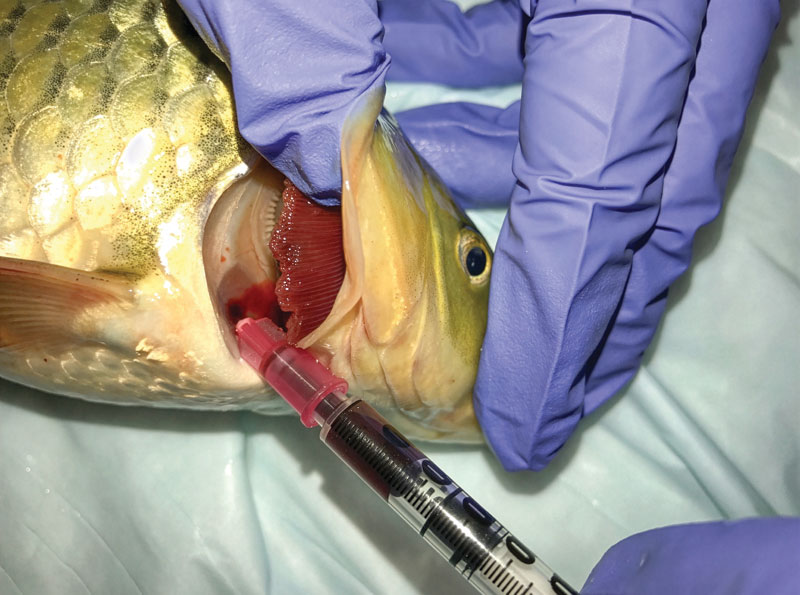
In fish, cardiac activity alone cannot confirm that an animal remains alive or that the brain is functioning. A goldfish heart, for example, can continue beating for as long as four hours after decapitation. This complicates assessment and helps explain why euthanasia protocols may require a secondary method after anesthesia.
The AVMA guidelines reject hypothermia and anoxia caused by removing a fish from water and allowing it to desiccate. Research on buffered MS-222 (tricaine methanesulfonate) also cautions against assuming that a high dose or extended exposure will reliably cause death in every species.
In one study, prolonged immersion in buffered MS-222 at 1,000 mg/L—five to 10 times the anesthetic dose—killed only seven percent of adult goldfish, a species tolerant of low oxygen. A separate study found the same concentration effective in juvenile goldfish, underscoring that results can differ by life stage and study conditions.
Researchers comparing methods in juvenile red head Tapajos eartheaters (Geophagus pyrocephalus) found that immersion baths with MS-222 or clove oil produced a statistically faster mean time to cardiac arrest than continuous topical delivery over the gills. The clinical takeaway in the source is a two-step approach for companion fish: induce general anesthesia in buffered MS-222, then apply a secondary method such as pithing, decapitation, or an intracardiac injection.
Reptiles: slow physiology complicates confirmation
Reptiles can resist hypoxia, hold their breath for extended periods, and shunt blood around the lungs. Their slow metabolism and limited vascular access can also stretch the time to cardiac arrest. In some species, a heartbeat may persist even after the heart has been removed from the body and placed in formalin.
EEG equipment and established normal EEG values are not widely available for reptile patients. To check for cardiac activity, Doppler or standard ultrasound is generally more useful than a stethoscope, which can be difficult to use through scales or a turtle’s shell. Because heart rates are slow, the source recommends listening with Doppler for at least one to two minutes, particularly in a heavily sedated animal.
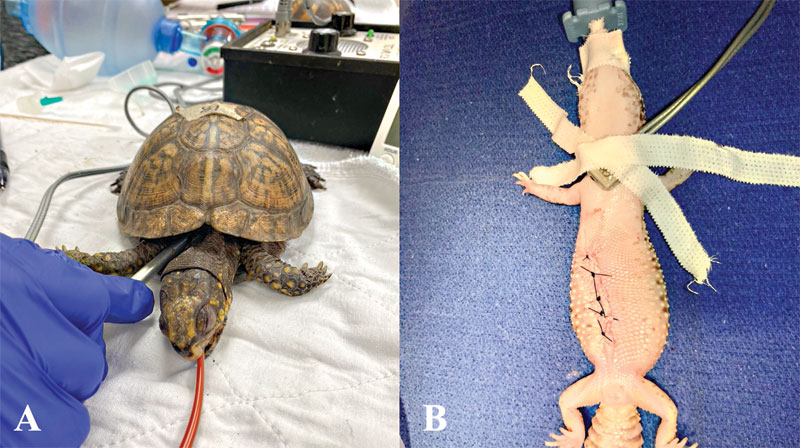
AVMA-accepted options include injectable agents, preferably intravenous, with intracardiac injection considered when the animal is unresponsive to stimuli, as well as intracoelomic administration. Inhalant anesthetics are acceptable with conditions for certain species, including snakes and some lizards. Their effectiveness as a sole method is limited by reptiles’ breath-holding, blood shunting, and tolerance of low oxygen. Hypothermia alone is considered unacceptable under the guidelines.
A study of adult leopard geckos compared intracoelomic pentobarbital at 400 or 800 mg/kg with intracardiac pentobarbital at 800 mg/kg, intracardiac potassium chloride (KCl) at 10 mEq/kg, and intracardiac lidocaine at 100 mg/kg. The animals were first sedated with alfaxalone at 20 mg/kg intramuscularly. Cardiac arrest followed immediately after intracardiac administration of each drug; with intracoelomic pentobarbital, it took 30 to 35 minutes.
Speed was only part of the result. Some geckos given intracoelomic pentobarbital developed injection-site redness and an intermittent arched posture. Six of nine animals given intracardiac KCl had severe muscle spasms, and six of nine given intracardiac lidocaine spontaneously regained breathing and a heartbeat five to six hours after initial cardiac arrest. The study therefore does not support those KCl and lidocaine doses as euthanasia methods for leopard geckos.
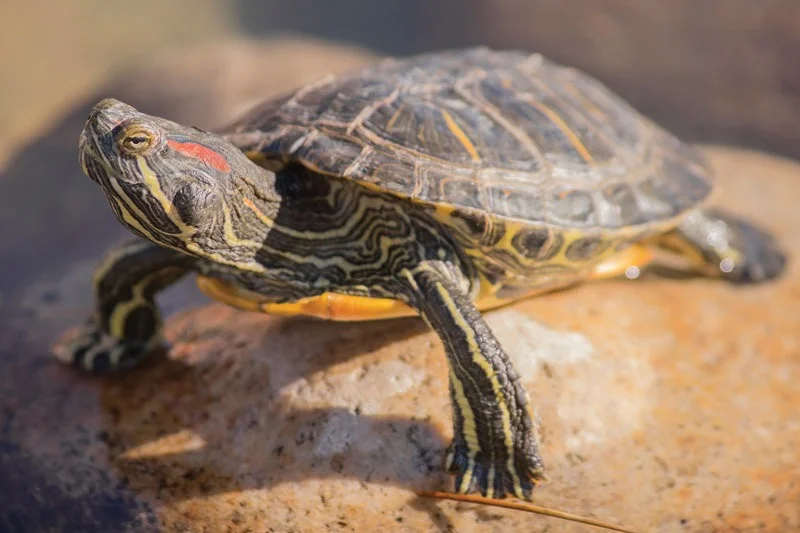
Transmucosal administration has produced mixed results in reptiles, too. In red-eared sliders, cloacal pentobarbital at 100 mg/kg leaked significantly in 75 percent of cases, prompting rescue intravenous dosing. Respiratory arrest occurred at about 15 minutes, but cardiac arrest averaged 18 hours, with a range of six to 26 hours. Oral administration was recommended in that study, though cardiac arrest remained prolonged.
For bearded dragons, a protocol using oral pentobarbital and phenytoin at 100 mg/kg followed by a second 400 mg/kg dose 20 minutes later also had drawbacks. Solution leakage occurred, four lizards showed abnormal behavior after the first dose, and cardiac arrest took an average of six hours. In a study of feral green iguanas given transmucosal pentobarbital and phenytoin at 100 or 200 mg/kg, every animal required a rescue intravenous dose.
Birds: sedation matters before injection
The AVMA guidelines cover pet, aviary, falconry, racing, research, and zoo birds separately from poultry. For non-poultry birds, intravenous barbiturate injection is an accepted method. The guidelines state that intravenous injection can be used in a conscious bird without causing fear or distress, but the clinical recommendation presented here is to use deep sedation or general anesthesia before administering euthanasia solution to a pet bird.
The right jugular, medial metatarsal, and ulnar veins are commonly used. In small birds, the jugular may be the only vein large enough for injection. Catheter placement can be difficult and often requires heavy sedation or anesthesia, so the drug is typically injected directly into the vein.
If intravenous access isn’t possible, intracardiac, intracoelomic, or intraosseous administration may be considered in an anesthetized or unconscious bird. Injections must avoid the air sacs and pneumatized bones, including the femur and humerus. Thoracic compression in a conscious bird is unacceptable under the AVMA guidelines. Studies of oral transmucosal euthanasia in wild birds and chickens have reported varying results.
Small mammals: familiar methods, different timing
Euthanasia approaches for ferrets, rabbits, and rodents resemble those used for dogs and cats. Intraperitoneal injection is accepted for many rodent species, though the author reports that cardiac arrest can take significantly longer with this route than with intravenous or intracardiac injection.
Rabbits and rodents are prey species, so heavy sedation or general anesthesia is recommended before euthanasia solution is administered. Intravenous access can be difficult, especially in animals with poor circulation; for an unconscious patient, intracardiac injection may be considered when a vein cannot be accessed.
A recent study assessed intrarenal pentobarbital administration in rabbits. The route is AVMA-accepted in unconscious animals, but cardiac arrest occurred significantly faster after intravenous injection. At the tested intrarenal dose of 3 mL per rabbit, 30 percent required a rescue intravenous dose.
Example protocols described by the author
The protocols below are examples, not fixed dosing instructions. The source emphasizes that there is no single method or specific dose that applies to every patient; clinical decisions must account for species and circumstances.
Example fish euthanasia protocol1. Induce general anesthesia by immersion in buffered MS-222 (300- Example reptile euthanasia protocol Example pet bird euthanasia protocol Example rabbit or rodent euthanasia protocol |
Planning for remains
After euthanasia, cremation or incineration is preferred where available. When remains are returned to an owner for burial, pentobarbital creates a risk of secondary poisoning for scavenging wildlife, including bald eagles. Burial rules differ by region, and clients should receive clear disposal guidance and information about that risk, ideally as part of a signed euthanasia consent form.
Across these species, the practical challenge is matching the method to the animal’s physiology and then confirming the outcome with appropriate monitoring. Heartbeat, breathing, and drug route each have limits; recent studies show why clinicians need to plan for delayed effects and potential rescue dosing.
Olivia A. Petritz, DVM, DACZM, graduated from Purdue University and then completed several internships and a residency in the field of zoo and exotic animal medicine at the University of California, Davis. Dr. Petritz became a diplomate in the American College of Zoological Medicine in 2013, specializing in zoological companion animals (exotic pets). Petritz started an exotics service at a specialty hospital in Los Angeles, Calif., following her residency, and is currently an associate professor of Avian and Exotic Animal Medicine at North Carolina State University.
References
- American Veterinary Medical Association (AVMA). (2020). AVMA guidelines for the euthanasia of animals: 2020 edition. Schaumburg, IL: AVMA.
- Balko, Julie A., Ayako Oda, and Lysa P. Posner. "Use of tricaine methanesulfonate or propofol for immersion euthanasia of goldfish (Carassius auratus)." Journal of the American Veterinary Medical Association12 (2018): 1555-1561.
- Perret-Thiry, Clément, Juliette Raulic, and Claire Vergneau-Grosset. "Evaluation of prolonged immersion in tricaine methanesulfonate for juvenile goldfish (Carassius auratus) euthanasia." Journal of the American Veterinary Medical Associationaop (2022): 1-5.
- Leclerc, Lydie-Amy, et al. "EUTHANASIA BY CONTINUOUS TOPICAL DELIVERY OF CLOVE OIL OVER THE GILLS RESULTS IN DELAYED CARDIAC ARREST IN COMPARISON TO IMMERSION BATH IN JUVENILE RED HEAD TAPAJOS EARTHEATERS (GEOPHAGUS PYROCEPHALUS)." Journal of Zoo and Wildlife Medicine2 (2025): 303-310.
- Heniff, Ashlyn C., and Julie A. Balko. "Potassium chloride administered via four routes for euthanasia of anesthetized goldfish (Carassius auratus)." Journal of Zoo and Wildlife Medicine3 (2023): 435-442.
- Knutson, Kyra, et al. "Evaluation of Euthanasia Methods Using Injectable Agents in Leopard Geckos (Eublepharis macularius)." Journal of Herpetological Medicine and Surgery1 (2022): 35-41.
- Ready, Zachary C., and Krista Keller. "Transmucosal pentobarbital is a successful euthanasia method in pond slider turtles (Trachemys scripta)." American journal of veterinary research7 (2023).
- Wong, Amanda D., et al. "Transmucosal administration of pentobarbital and phenytoin solution induces euthanasia in bearded dragons (Pogona vitticeps)." American journal of veterinary research6 (2024).
- Masri, Aiden, et al. "A Comparison of Intravenous and Oral Transmucosal Administration of Pentobarbital Sodium for Humane Euthanasia in White Leghorn Chickens (Gallus gallus domesticus)." Journal of Avian Medicine and Surgery3 (2025): 132-138.
- Gardhouse, Sara, et al. "Evaluation of Oral Transmucosal Administration of Pentobarbital for Euthanasia of Conscious Wild Birds." Journal of Applied Animal Welfare Science (2021): 1-11.
- Masri, Aiden, et al. "A Comparison of Intravenous and Oral Transmucosal Administration of Pentobarbital Sodium for Humane Euthanasia in White Leghorn Chickens (Gallus gallus domesticus)." Journal of Avian Medicine and Surgery3 (2025): 132-138.
- LeGrand, Jessica L., et al. "Comparison of Intrarenal and Intravenous Injections of Sodium Pentobarbital for Euthanasia in New Zealand White Rabbits (Oryctolagus cuniculus)." Journal of the American Association for Laboratory Animal Science4 (2025): 770-777.
- Viner, T. C., et al. "Integrating the forensic sciences in wildlife case investigations: a case report of pentobarbital and phenytoin toxicosis in a bald eagle (Haliaeetus leucocephalus)." Veterinary pathology5 (2016): 1103-1106.
Discussion
Sign in to join the discussion.