The size of animal shelters and rescues significantly influences intake and adoption rates, showcasing a complex ecosystem of contributing organizations.
On National Adopt a Shelter Pet Day, we celebrate the myriad adoptions facilitated by an extensive network of shelters and rescues across the United States. The patterns of adoption are anything but uniform; they arise from a varied system of organizations, each varying widely in size and responsibility.
Using data from Shelter Animals Count projected for 2025, we can assess how the size of these organizations influences both animal intake and adoptions. The narrative reveals a system where responsibility is widely shared but where trends in intake and adoption clearly diverge.
Organizational Size and Their Impact on Intake
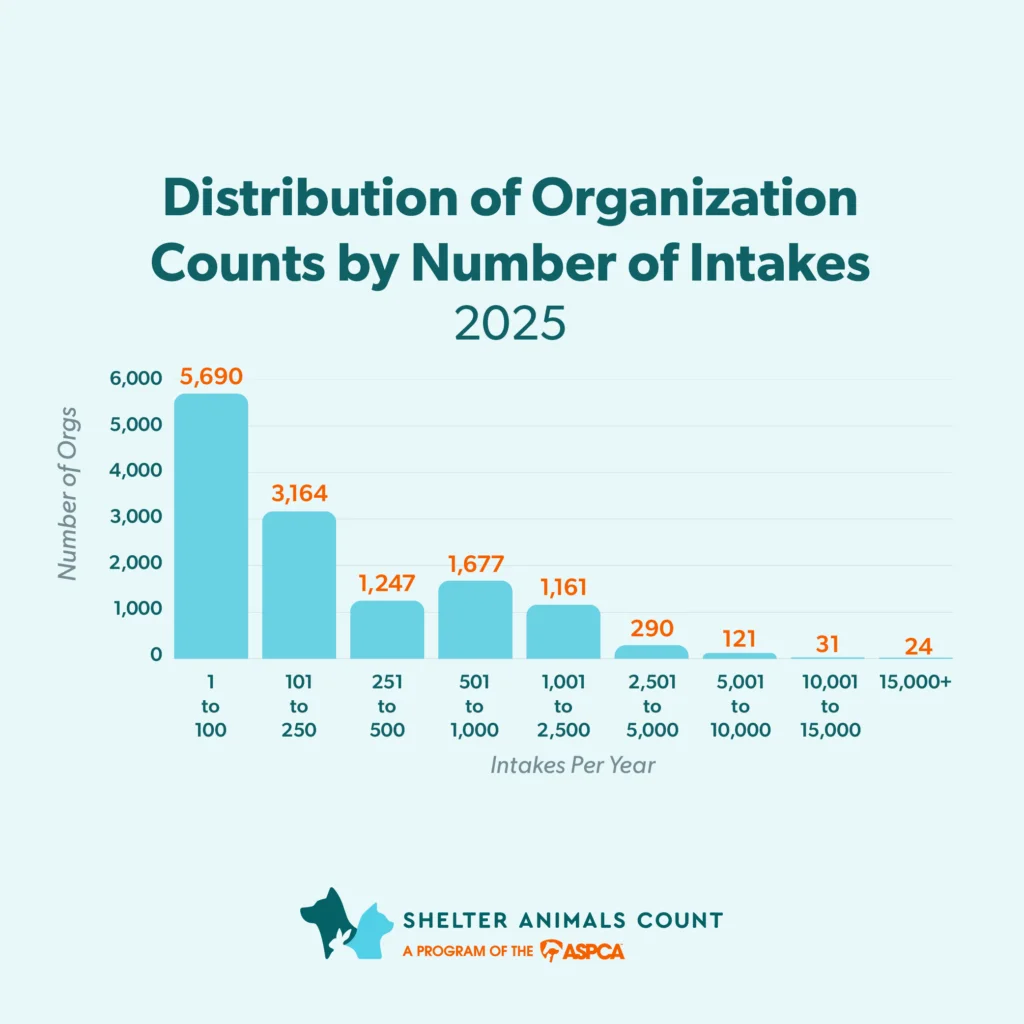
Bearing the burden of animal intake, a striking 87.7% of shelters and rescues take in 1,000 or fewer animals each year. This statistic highlights an essential truth: intake responsibilities are not confined to a select few high-volume shelters but are instead distributed across a significant number of local organizations. Yet, it’s also important to recognize that larger organizations still dominate in terms of the volume of animals they take in, acting as primary entry points for pets in need.
This observation points to an interesting dynamic in the sheltering framework: while intake is broadly handled among numerous organizations, a disproportionate amount ends up with high-intake establishments. The charts depict this distribution of intakes remarkably well, illustrating the contrasting roles within the ecosystem.
Adoption Patterns: A Closer Look
In the context of adoptions, the landscape looks different. Only 13 organizations in the U.S. are responsible for adopting out more than 10,000 animals annually, yet collectively, they represent a mere 4.6% of all national adoptions. This indicates that the overwhelming majority, comprising 95.4%, occurs within more than 13,000 smaller shelters and rescues. Although larger shelters are significant players, they are not the sole contributors to adoption rates.
The mid-sized organizations, specifically those that adopt out between 501 to 2,500 animals each year, are particularly notable. Although they represent just 13.4% of all shelters, they secure a whopping 40.8% of total U.S. adoptions. This group serves as the main engine behind adoption efforts, moving substantial numbers of animals and creating an influential collective impact that overshadows their smaller counterparts.
The Backbone of the Adoption System: Small Shelters
It's also vital to acknowledge the significance of smaller organizations in the adoption framework. A remarkable 85.0% of U.S. shelters and rescues adopt out 500 or fewer animals annually, contributing to a significant 34.1% of total national adoptions. As staggering as it seems, almost half of the organizations—49.7%—adopt out 100 or fewer animals per year. This cohort alone includes 6,655 organizations, most of which operate at around two adoptions weekly. While individually their figures may seem modest, together they form a crucial network, often being the only local adoption resource in various communities.
Collective Impact of Smaller Organizations
When considering their cumulative effect, smaller shelters exhibit a surprising parity with the largest organizations in terms of national adoption outcomes. Specifically, 9,657 organizations adopting 250 or fewer animals each year constitute a significant 72% of the total field, completing four times as many adoptions compared to all higher-volume organizations combined. The numbers present a compelling case; collectively, smaller shelters achieve substantial results, emphasizing their indispensable role in the adoption ecosystem.
The Interconnected System of Intake and Adoption
Intake and adoption are not allocated evenly across organizations. Larger entities manage a significant portion of national intake, shifting the adoption responsibility downstream to smaller and mid-sized shelters. This interconnectedness demonstrates a vital aspect of the sheltering system: animals typically enter at larger organizations yet find homes through a broader network of shelters across various sizes.
The Big Picture on Adopt a Shelter Pet Day
As we observe Adopt a Shelter Pet Day, it’s essential to frame the conversation not just around individual actions to adopt pets, but also the broader collaboration that makes these adoptions viable. The data shows that a diverse range of organizations contributes to these efforts, with small and mid-sized shelters playing pivotal roles in enhancing national adoption outcomes. A transparent understanding of the entire system illuminates existing capacities and opportunities and reinforces the idea that regardless of their scale, every organization plays a vital role in this collective mission.
Resources for Adoption:
Adopt-a-Pet – Discover pets available for adoption in your area.
ASPCAPro – Access local shelter resources for adopting and fostering pets in your vicinity.
Discussion
Sign in to join the discussion.