Learn how to effectively install a central air system using a linear piston air pump to optimize airflow in your aquarium fish room.
For dedicated aquarists, a well-equipped fish room can often be a logistical challenge. Among the essential systems for managing multiple tanks is a central air system, which eliminates the need for individual filters for each tank. Instead, a linear piston air pump can distribute air more efficiently to multiple sponge filters or other air-driven devices, providing greater economy and resource management.
Choosing the Right Pump
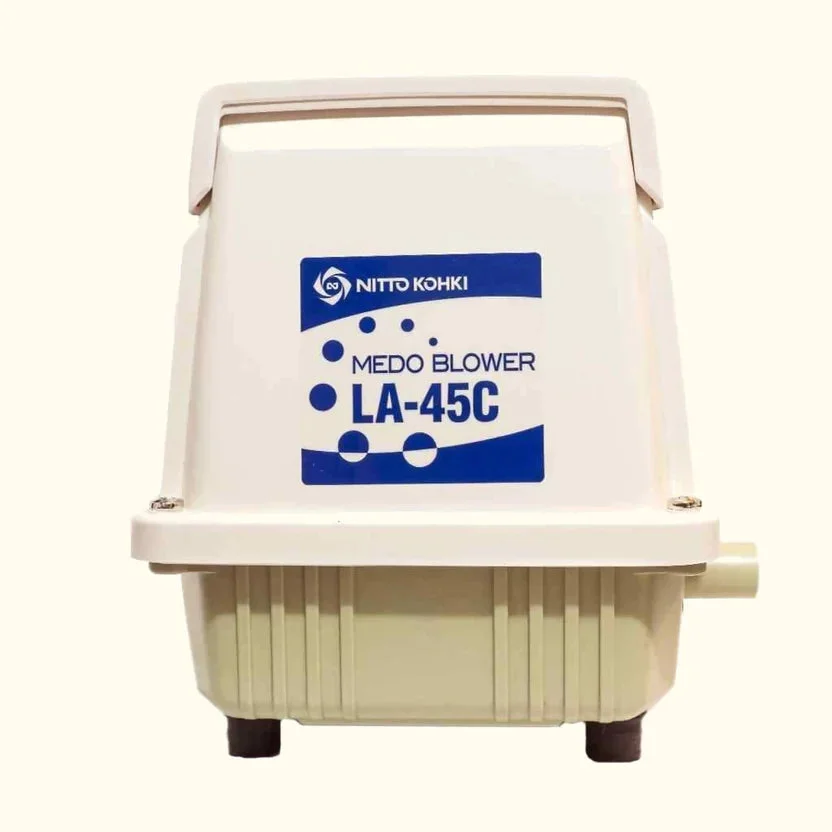
Determining the ideal linear piston air pump largely depends on your specific setup. Factors such as tank size, water depth, and resistance from connected devices all play a role in calculating the necessary air output. For example, the LPH45 linear piston air pump delivers 47 liters of air per minute, theoretically enough to supply about 47 smaller tanks. However, this number decreases with larger aquariums. A strategic advantage of these pumps is their capacity to be connected in series, making it easy to add more power as your fish room evolves.
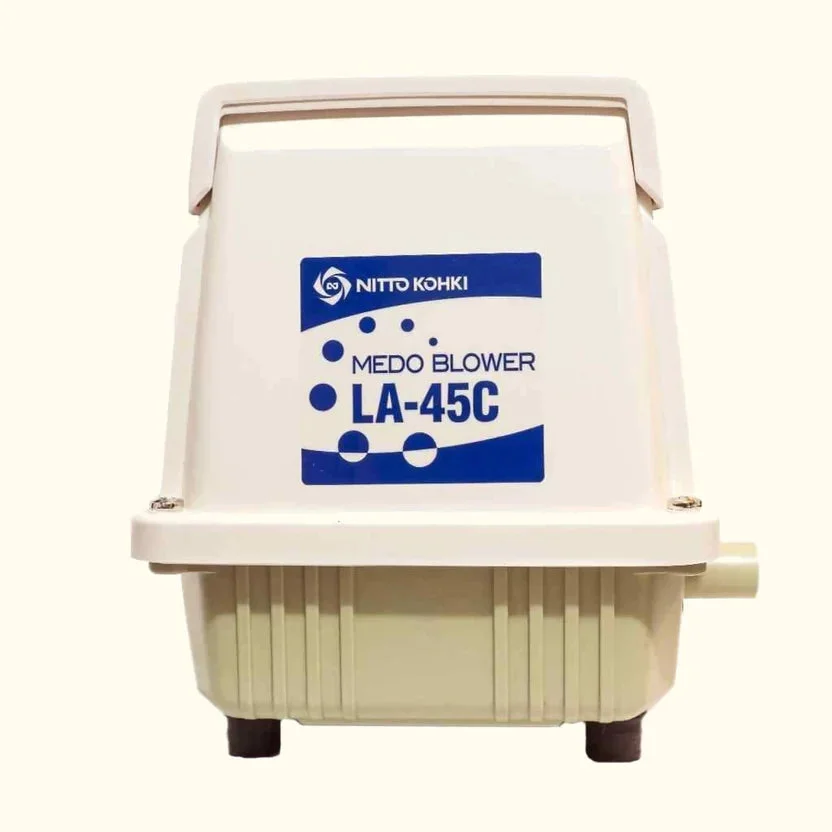
LPH45 linear piston air pump
Setting Up Your Air Delivery System
To create an effective central air system, you'll construct a loop with PVC piping around the perimeter of the fish room. This setup can be placed high on the wall, which prevents the need for individual check valves at each device connection. However, if a lower installation suits your layout better, adjustments can easily be made.
Necessary Materials
- LPH45 linear piston air pump
- 1” PVC pipe (enough to complete the perimeter of the room and a little extra for the air pump connection)
- 1” PVC elbow fittings for room corners
- 1” PVC couplings for joining pipes
- 1” PVC tee fitting (for air pump connection)
- PVC pipe adapter with slip and threaded fittings
- PVC barbed hose adapter to connect tubing
- ¾” vinyl tubing to connect the air pump to the PVC loop
- Two hose clamps to secure the vinyl tubing
- Clear PVC cement or glue
- Airline tubing for aquarium connections
- Metal air valves for the PVC loop
- Plastic inline air valves for pressure adjustment
- 1” conduit straps and screws for mounting
- PVC pipe cutter
- Electric drill with a 3/16” drill bit
- Sharpie marker
- Stud finder (optional)
Installation Steps
- First, position your linear piston air pump on a stable surface away from congestion but within reach of a power source. It's ideal for this unit to be in an open area to maximize airflow.
- Construct a PVC loop that aligns with the room's perimeter. Utilize 90-degree elbow fittings at corners for rectangular-shaped rooms, adjusting angles as necessary for other configurations.
- Locate where the air pump will connect and insert a PVC tee fitting into the loop. This fitting should have the horizontal part facing the loop and the vertical part pointing downward.
- Before sealing with glue, test the entire setup to confirm that it conforms to the room's shape.
- Begin gluing pipe segments, starting in the corner closest to the air pump. Maintain the PVC pipe close to the ceiling by securing it with conduit straps.
- Add additional PVC sections sequentially, consistently securing to the wall as you progress to complete the loop.
- Connect the vertical part of the tee fitting to the air pump using a length of PVC pipe and then attach the vinyl tubing leading down to the pump.
- Attach the other end of the tubing to the air pump, securing with hose clamps to ensure no air leaks.
- Mark locations on the PVC loop for where you need air to supply aquariums, and use the drill to create holes angled downward for air flow.
- Secure the metal air valves into the drilled holes, adjusting their positions to line up with the needed air output.
- Lastly, connect airline tubing from each valve to the aquarium devices like sponge filters, and adjust the valves to maximize airflow.
Practical Tips
For systems with fewer than 15 aquariums, you may face challenges with airflow. Adding metal air valves and attaching short lengths of tubing with air stones can help manage excess air and reduce noise. For setups exceeding 20 tanks, consider adding a second air pump for optimal performance.
While functionality is key, aesthetics might be a concern. Hanging fabric curtains from a rod can effectively conceal the PVC loop while allowing easy access when needed.
Don’t overlook routine maintenance: a quick inspection of the air pump filter at least once per year can prevent potential blockages, ensuring uninterrupted airflow throughout your fish room.
For additional detailed guidance on establishing a fish room, check out our extensive resources in the Fish Room Builds section of our Advice Center. There, you'll find tips on setting up tank racks, automatic water changes, and much more.
Discussion
Sign in to join the discussion.